“I met my counselor once junior year. Ten minutes, and it was about my class schedule. I found out about fee waivers from a TikTok.”No FAFSA help · Unaware of fee waivers · No college list
All projects
AI Powered College Advisor
250+students in the first two months
15countries reached
$0spent on paid marketing
5languages supported
Live at hiobee.com, grown entirely through word of mouth, and cited as a case study in a UC Davis design course.
Obee is a free AI college advisor for high school students and community college transfers. A guided conversation builds an honest, tiered list of schools that actually fit, in five languages.
I designed and built it alone, from paper sketches taped to my dorm wall to a live product at hiobee.com.
- Client
- Independent project
- Role
- Solo designer and developer
- Timeline
- June 25 to July 21, 2026
- Stack
- Vanilla JS · Vercel · Claude Sonnet 4.6
- Price
- Free for students
Where it started
Before UC Davis I attended a community college in San Francisco. Deciding which university to attend and which major to pursue, I felt overwhelmed by the number of options and by the articulation agreements between colleges and universities.
With so many students preparing to transfer, my counselors did not always have time to meet with me, and our appointments were short. I started using ChatGPT as an extension of my advising, to filter information about prerequisites, courses and grades and to reach the right links faster. It helped, but I kept thinking that I wished I could standardize those conversations, so that everyone going through the same transition could start from a conversation already full of context.
Good advice shouldn't depend on your zip code
My experience was not unusual. The American School Counselor Association has recommended one counselor for every 250 students since 1965. In the 2023/24 school year the national average was 376:1, with 49,404,386 public-school students sharing 131,230 counselors, and that average hides a massive spread between states.
376:1▲ 250 recommended
645:1
443:1
171:1
Recommended by ASCA, 1 counselor for every 250 studentsStudents per counselor, on a scale of 0 to 700Source: ASCA / NCES 2023/24
Who gets help, and who doesn't
Caseloads are only half the story. Even when a counselor exists, college advising competes with schedules, testing, discipline and mental-health crises, and private schools invest in it far more than public ones.
3 of 51
22%Private 51%
33%Private 68%
4%
7,000,000
students attended a school with a police officer or security guard but no school counselor.U.S. Dept. of Education, Civil Rights Data Collection 2020/21
How each state compares
Only 3 of 51 (50 states and D.C.) meet the 250:1 standard. The map shows every state's students-per-counselor ratio, with the worst, the best and California called out.
450+ critical350 to 449 high251 to 349 elevated250 or less, meets standard
Listening to students
Numbers show the gap, and students explain what it feels like. Before designing anything I went looking for their side of the story online, in forums where students talk about applying and transferring.
I also talked with local students at City College of San Francisco who were going through the same transfer process I had, and collected more answers through a Google Forms survey. These are the themes that kept coming up.
Who Obee is for
Personas drawn from the research, each one a composite of the students I heard from.
“Reddit was my counselor. I wrote my UC essays at 1 a.m. because that's the only time I had, and there's no one to ask at 1 a.m.”Only free after midnight · Essay feedback · UC vs CSU confusion
“My counselor has 500 kids. She knows the ones in trouble and the ones in AP. If you're in the middle, you're invisible.”Invisible 'middle' student · No scholarship guidance
“She's here on Tuesdays. If my question comes up on a Thursday, it waits a week, and deadlines don't wait.”Part-time access · Missed early deadlines
“I translate every financial-aid form for my parents, and I'm scared one wrong answer on the FAFSA puts my family at risk.”Language barrier at home · FAFSA fear · No bilingual guidance
“Coaches email me, but nobody at school explains NCAA eligibility or which offers are real. I'm guessing with my future.”Recruiting confusion · Eligibility rules
“My friends' parents paid a private consultant $200 an hour. I had YouTube and a spreadsheet I made myself.”Private help is unaffordable · Overwhelming options
“I met my counselor six times senior year. We built my list together. It felt like someone was actually on my team.”(What good access looks like)
01Access is a zip-code lotteryThe same student gets six counseling meetings in Vermont and one in Arizona. Quality of guidance tracks geography and school funding, not need.
02College advising gets the leftoversCounselors triage crises, schedules and testing first. Public-school counselors spend about a fifth of their time on college, while private schools spend half.
03Information exists, translation doesn'tFee waivers, FAFSA, UC vs CSU, NCAA rules. The answers are online, but nobody maps them to the student's own situation, language and deadlines.
04Families can't fill the gapFirst-gen and immigrant families want to help but don't know the system; students end up translating forms and guessing alone.
05Students already ask the internet at midnightReddit, TikTok and YouTube are the de facto counselors, available 24/7, but generic and often wrong. The need is real-time, personal and trustworthy.
Students don't lack ambition or information. They lack a knowledgeable person who knows their situation and is there when they need it.
From paper to product
The idea stayed an idea until my Design Drawing class at UC Davis in Winter 2026, whose final project let us sketch a UI/UX experience. Seeing how quickly good ideas came out of rapid sketches, I started drawing the advisor I had always wanted.
Without a whiteboard, I used the blank sheets left over from class, drew the screens one by one and taped them to the wall of my dorm room, so I could see the whole experience and the flow between screens at once.
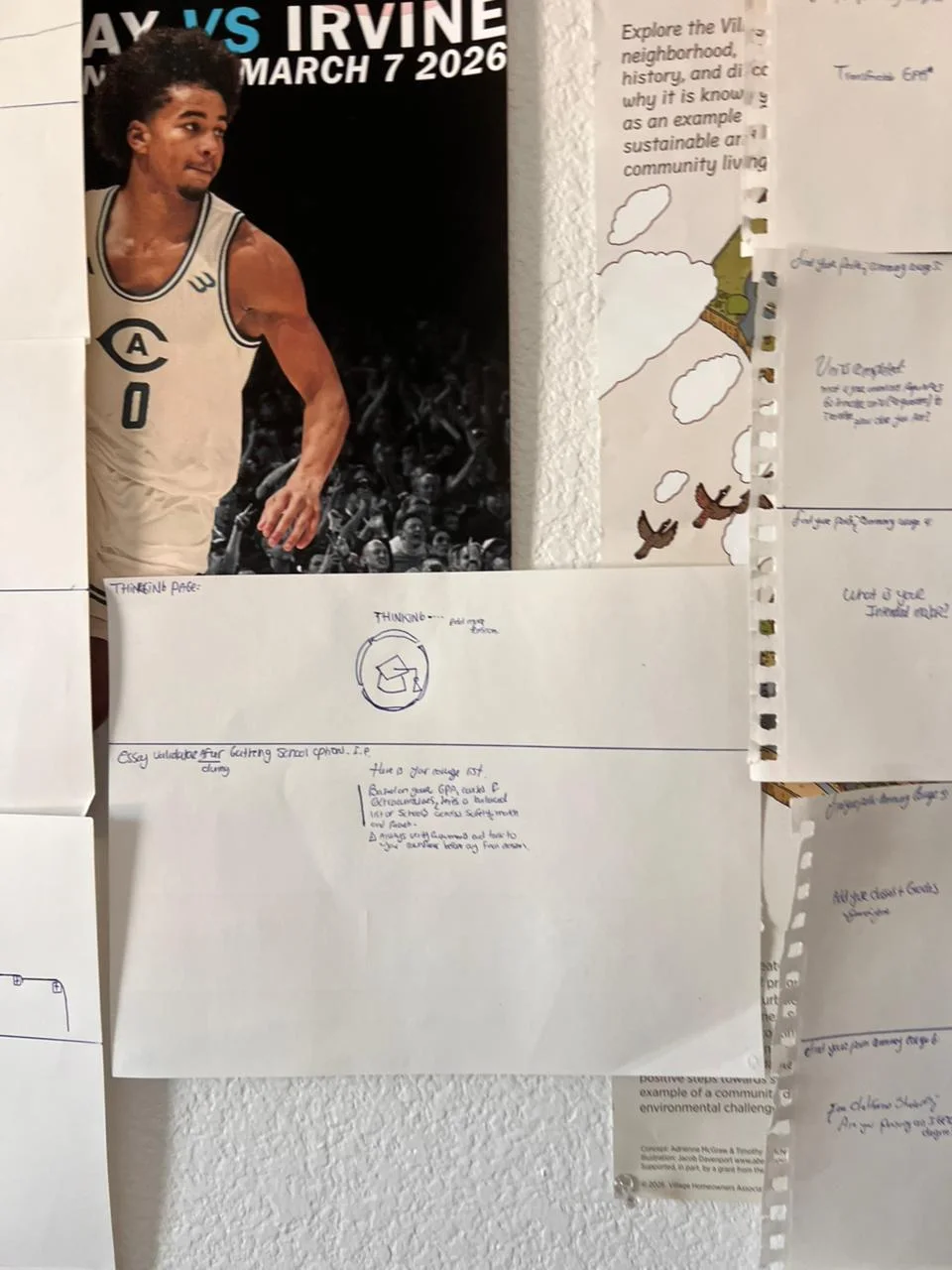
Next I translated the sketches into Figma, designing each screen the way I had pictured it. I worked in a hybrid between mid and high fidelity, adding enough color to get a feel for what students would actually see, and then built the product from there.
Screens added later in the process skipped the Figma stage and took their visual style from the screens already designed, so the whole intake reads as one family.
Homepage
Sketch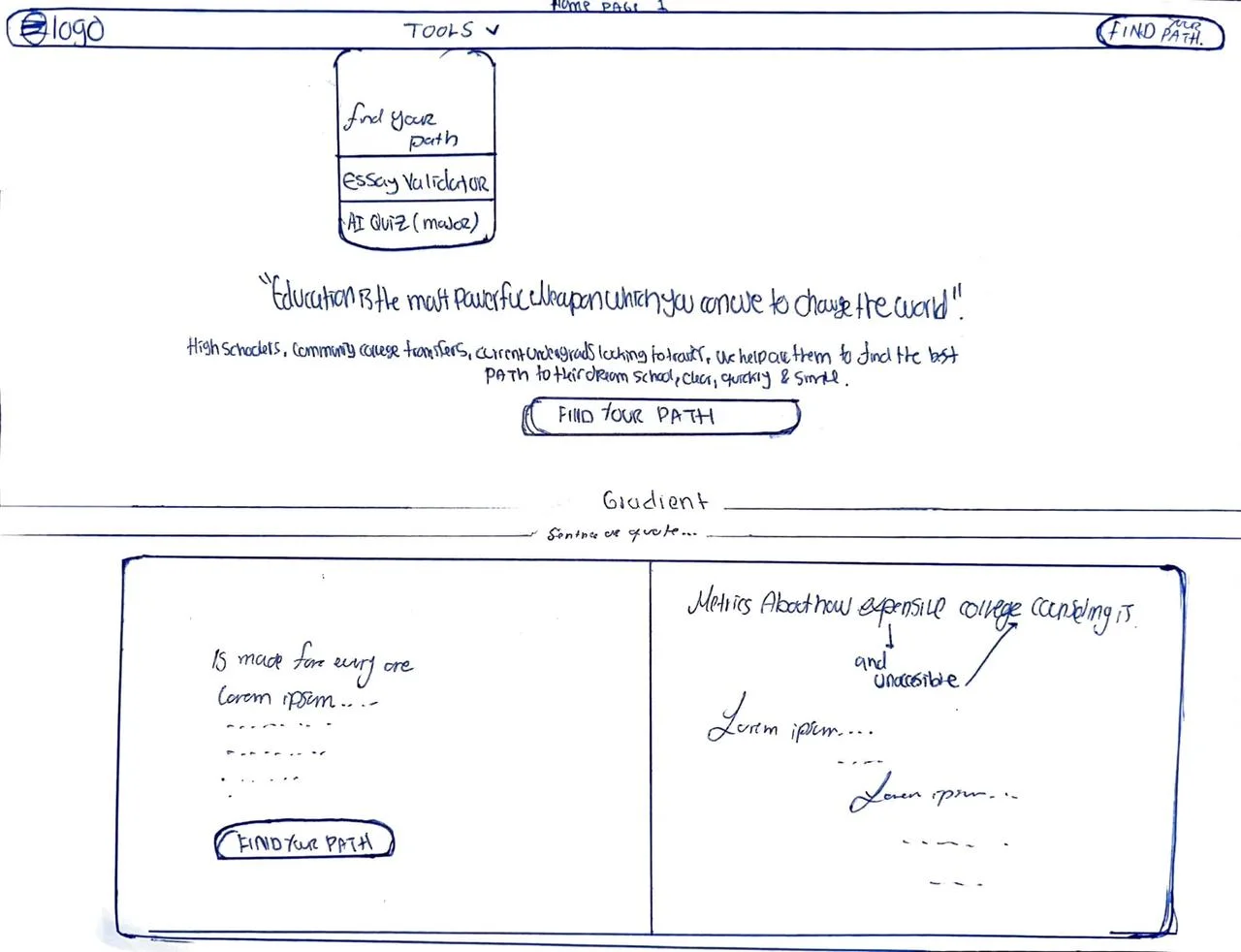
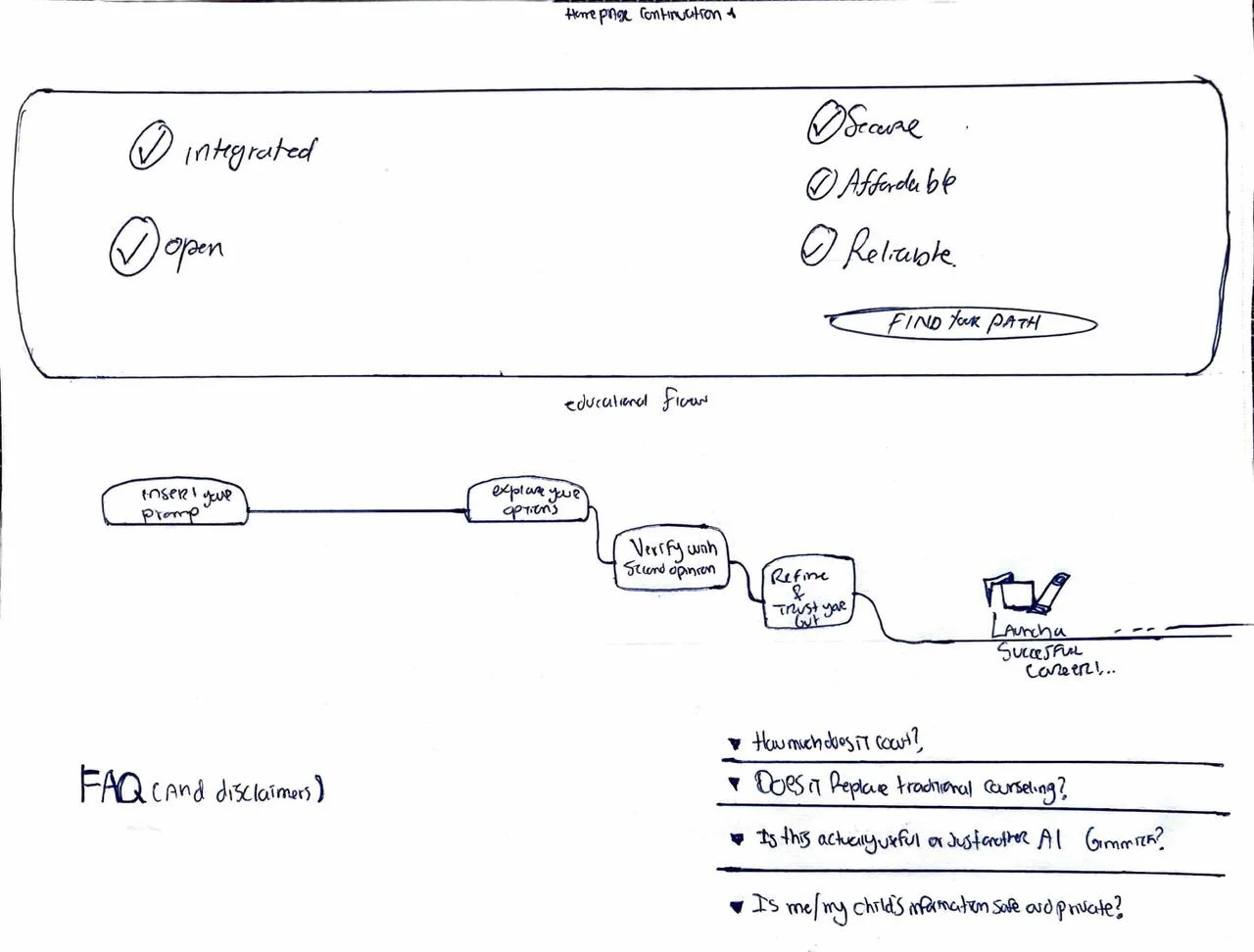
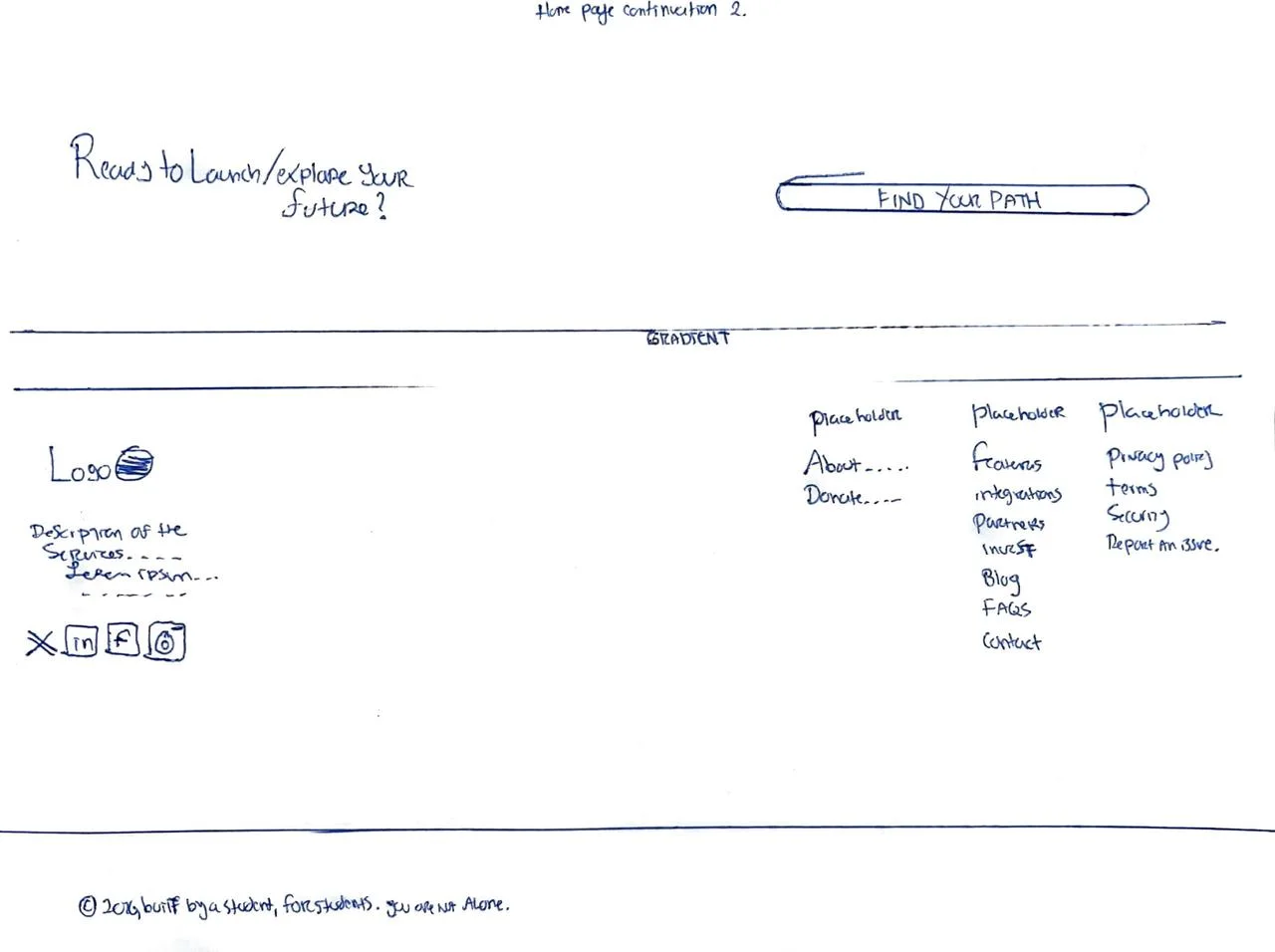
Mid / high fidelity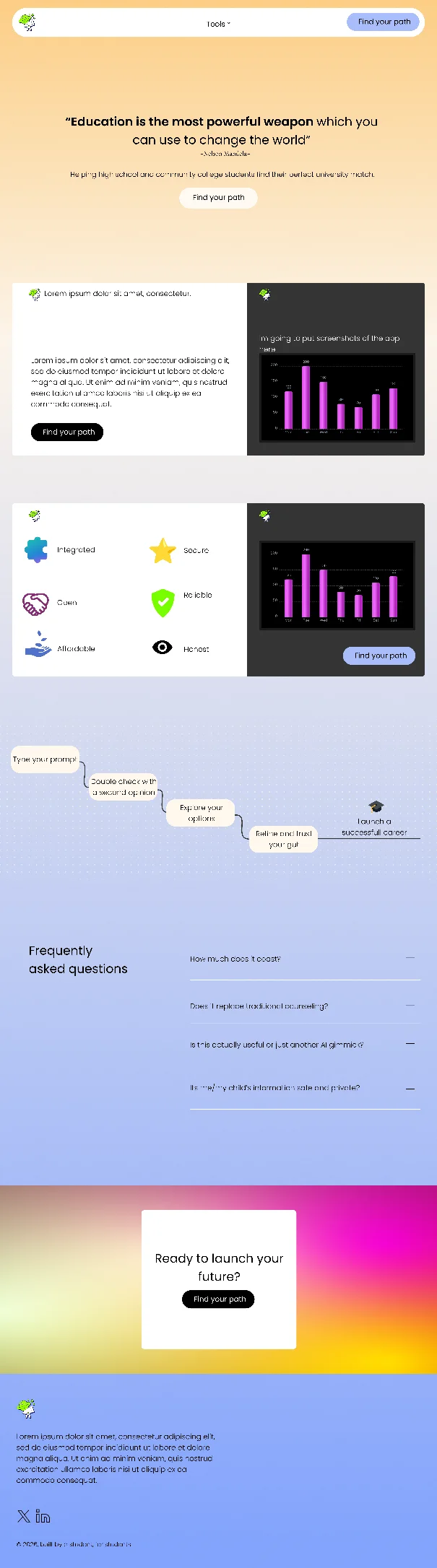
Shipped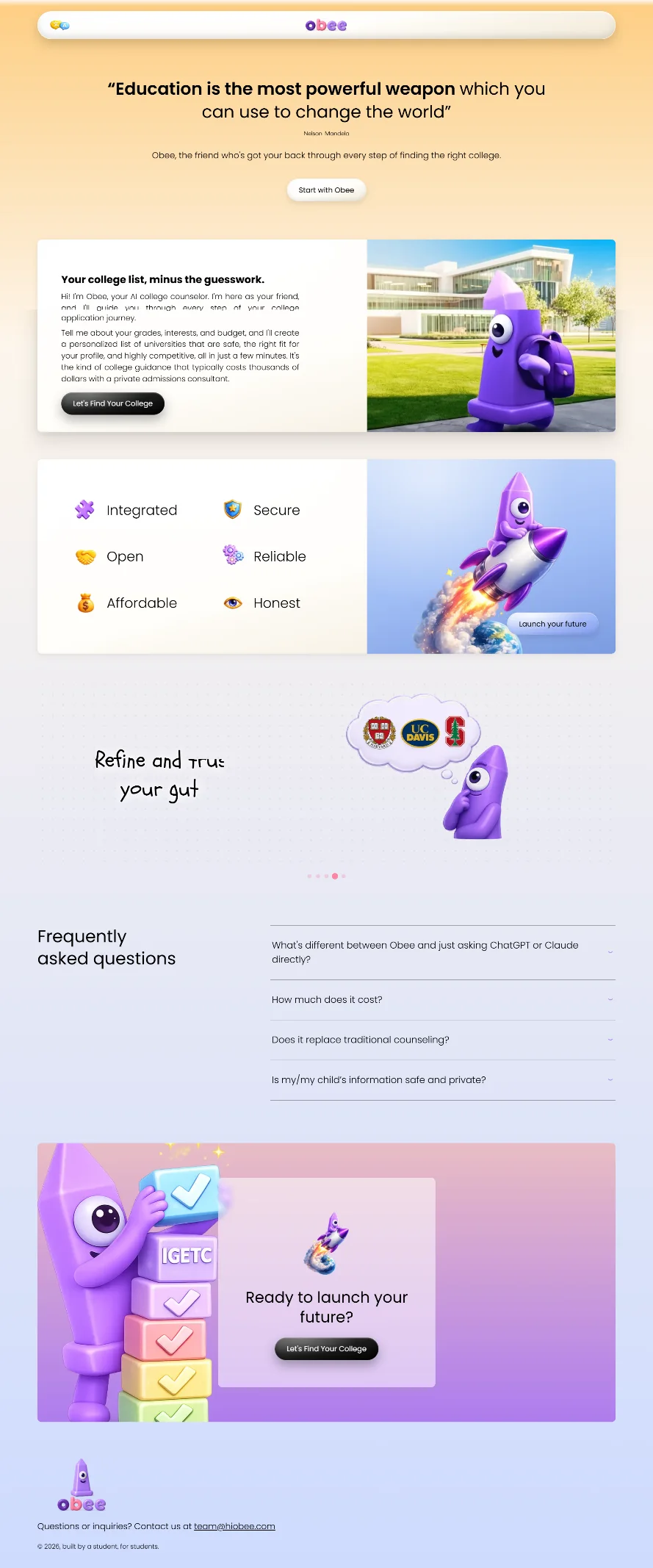
Getting to know each student
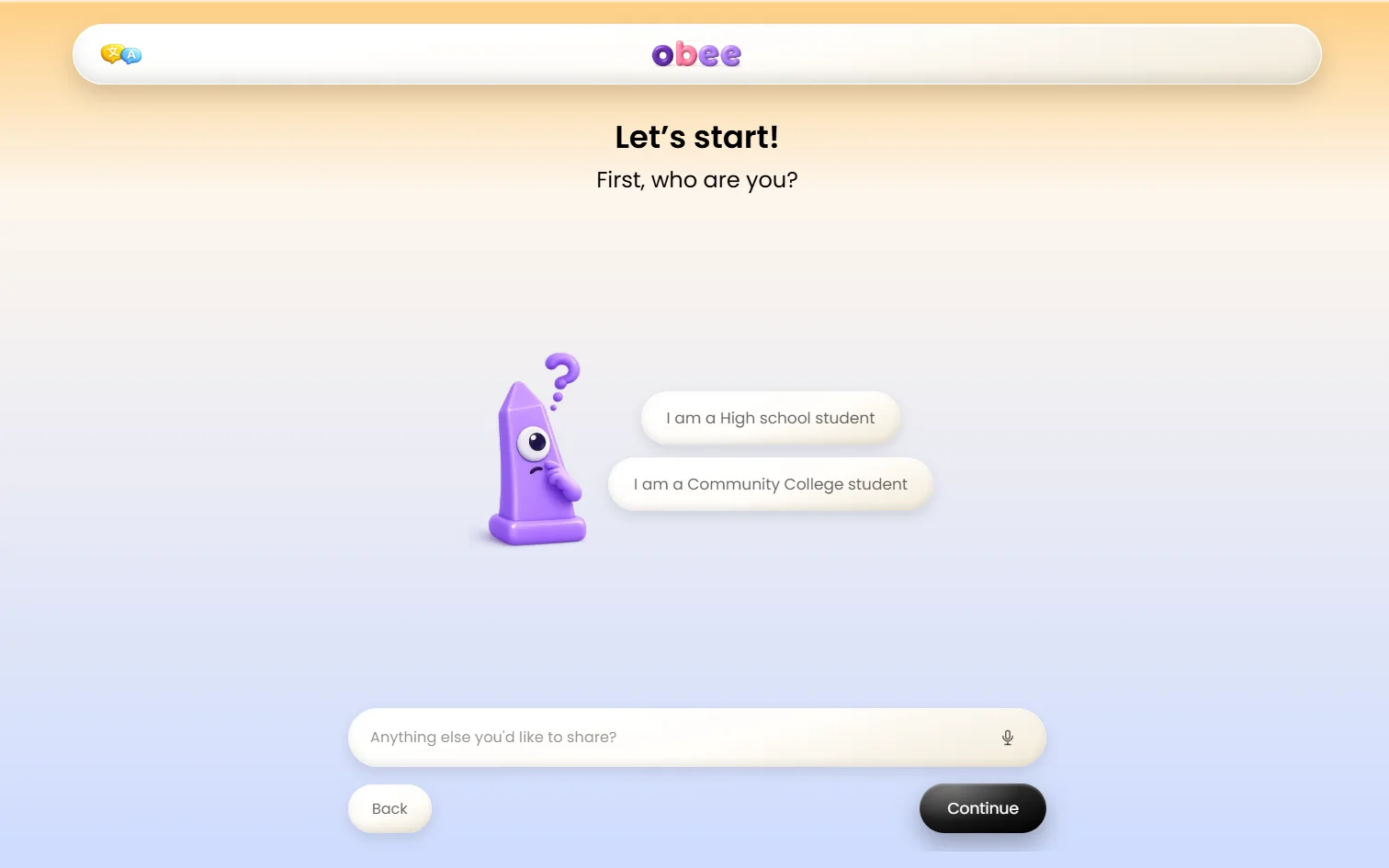
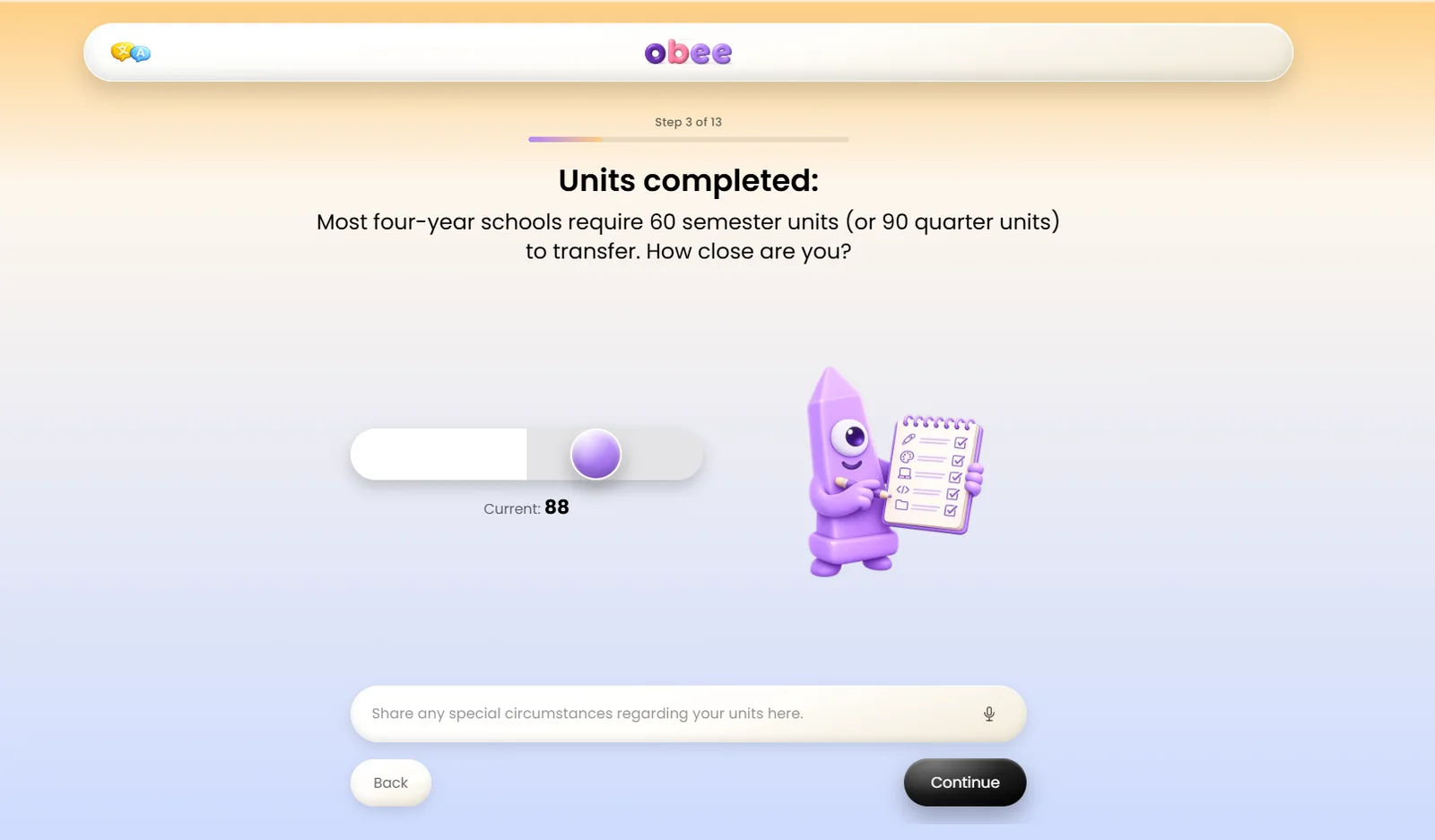
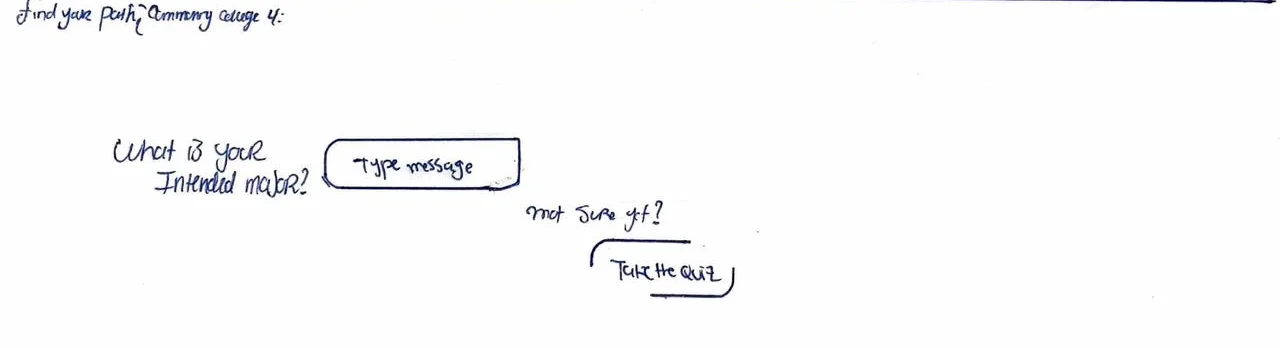
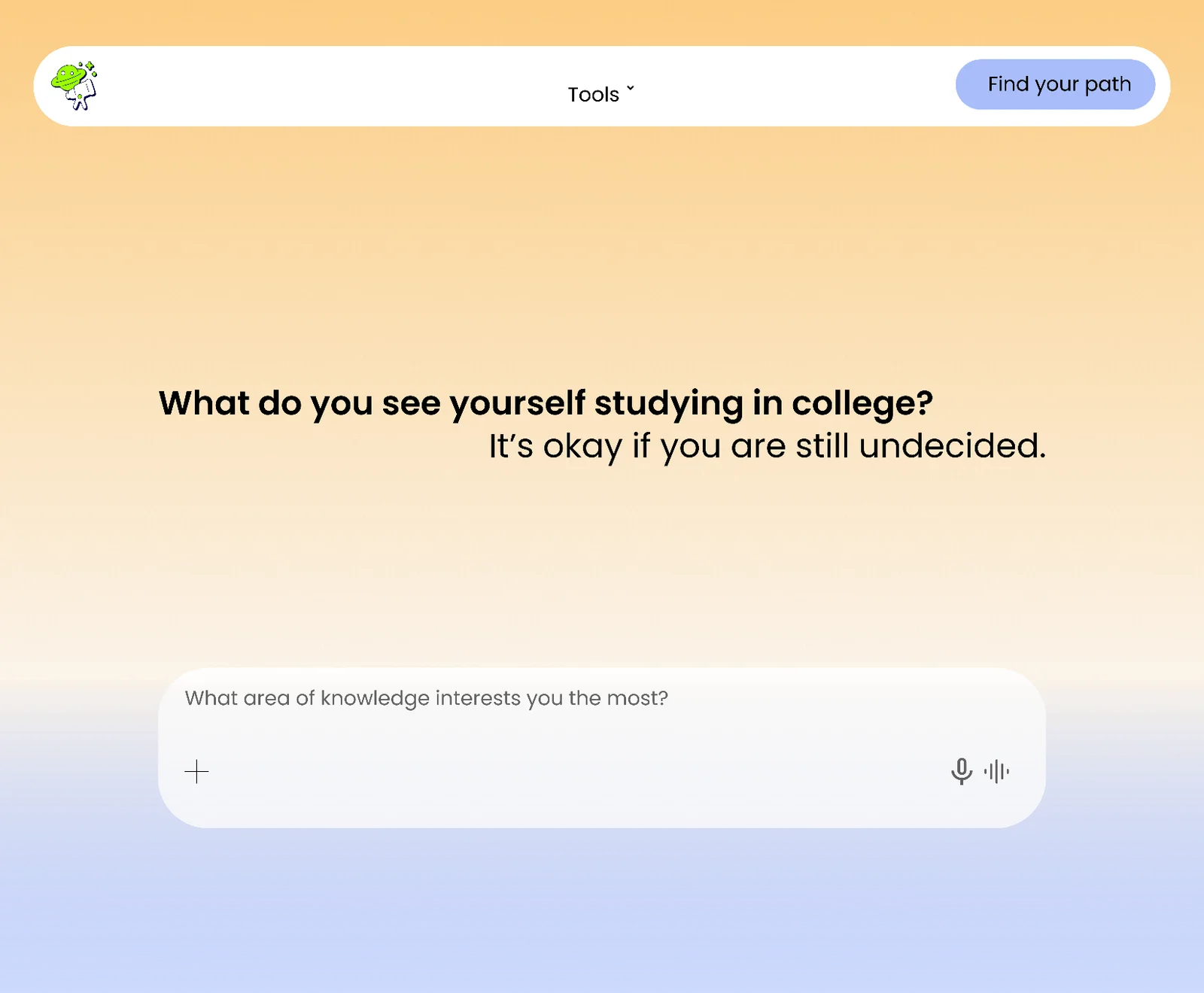
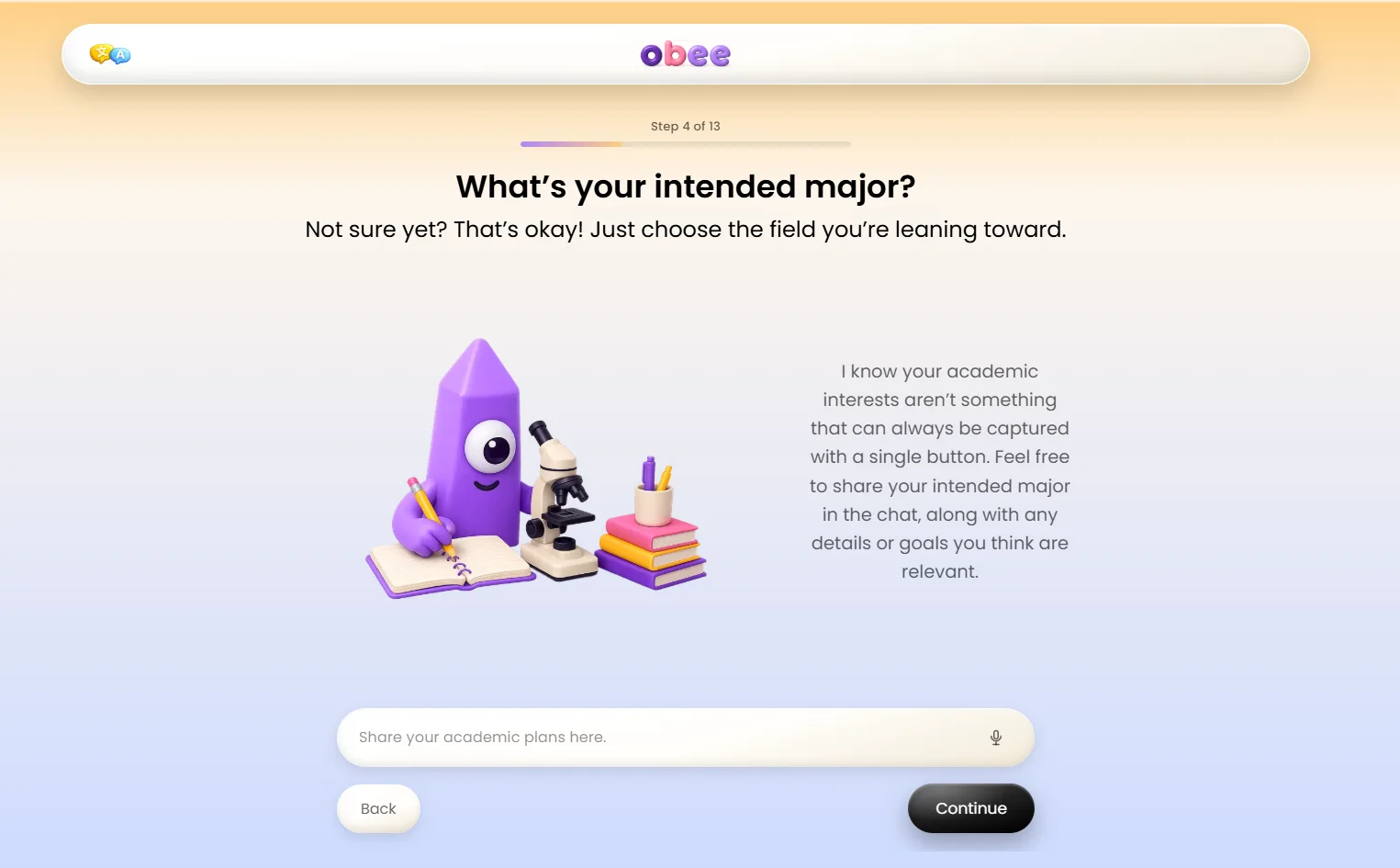
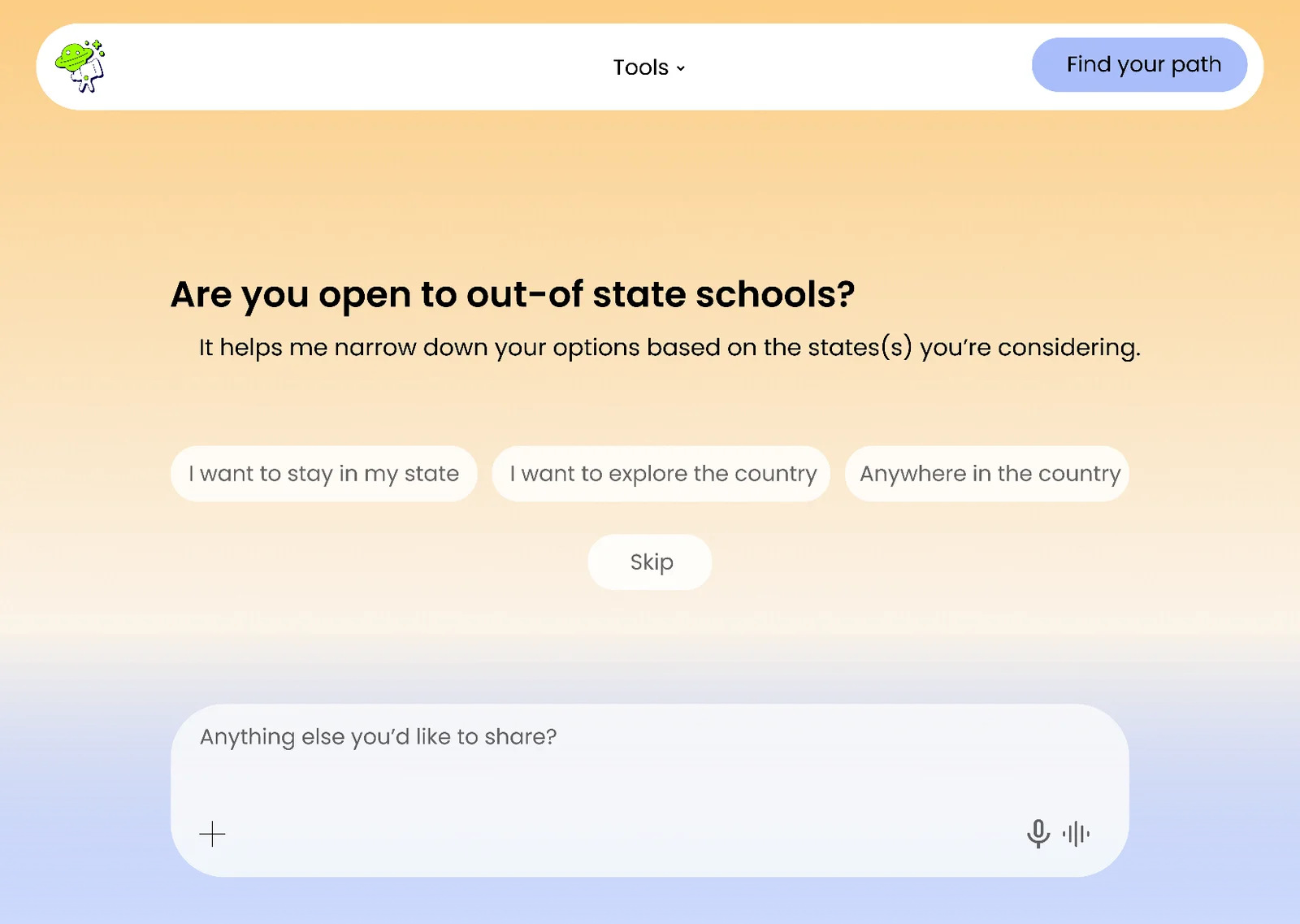
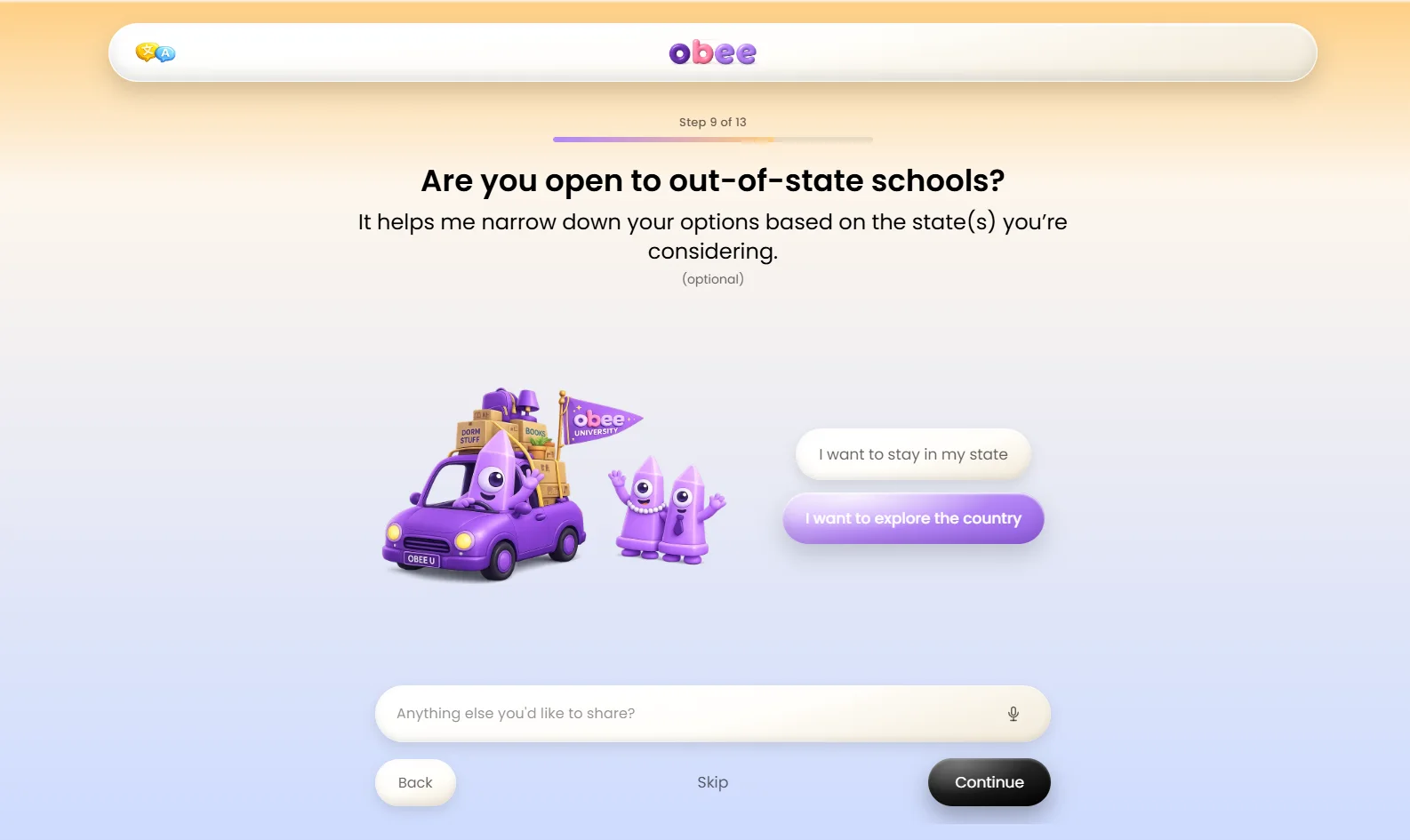
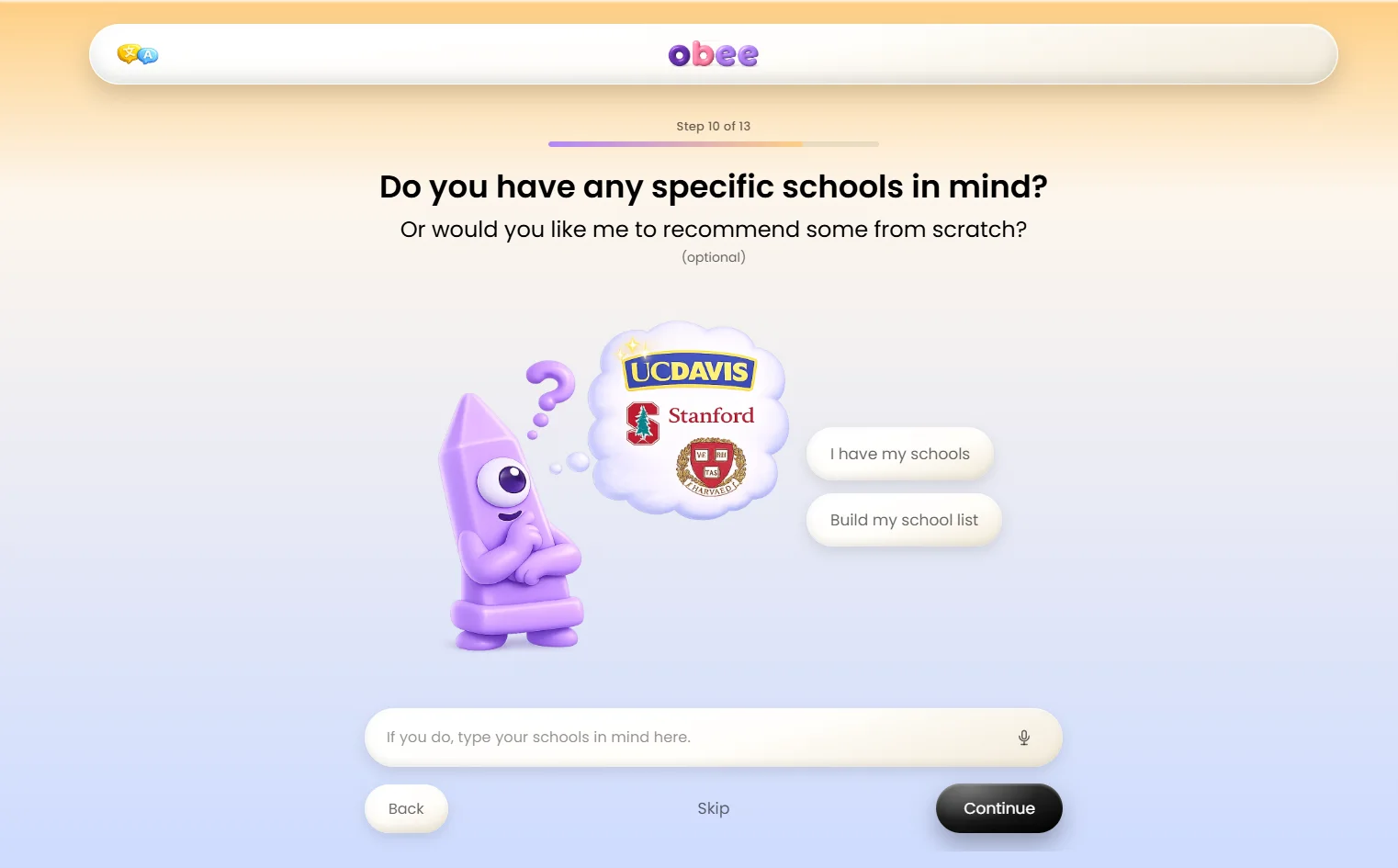
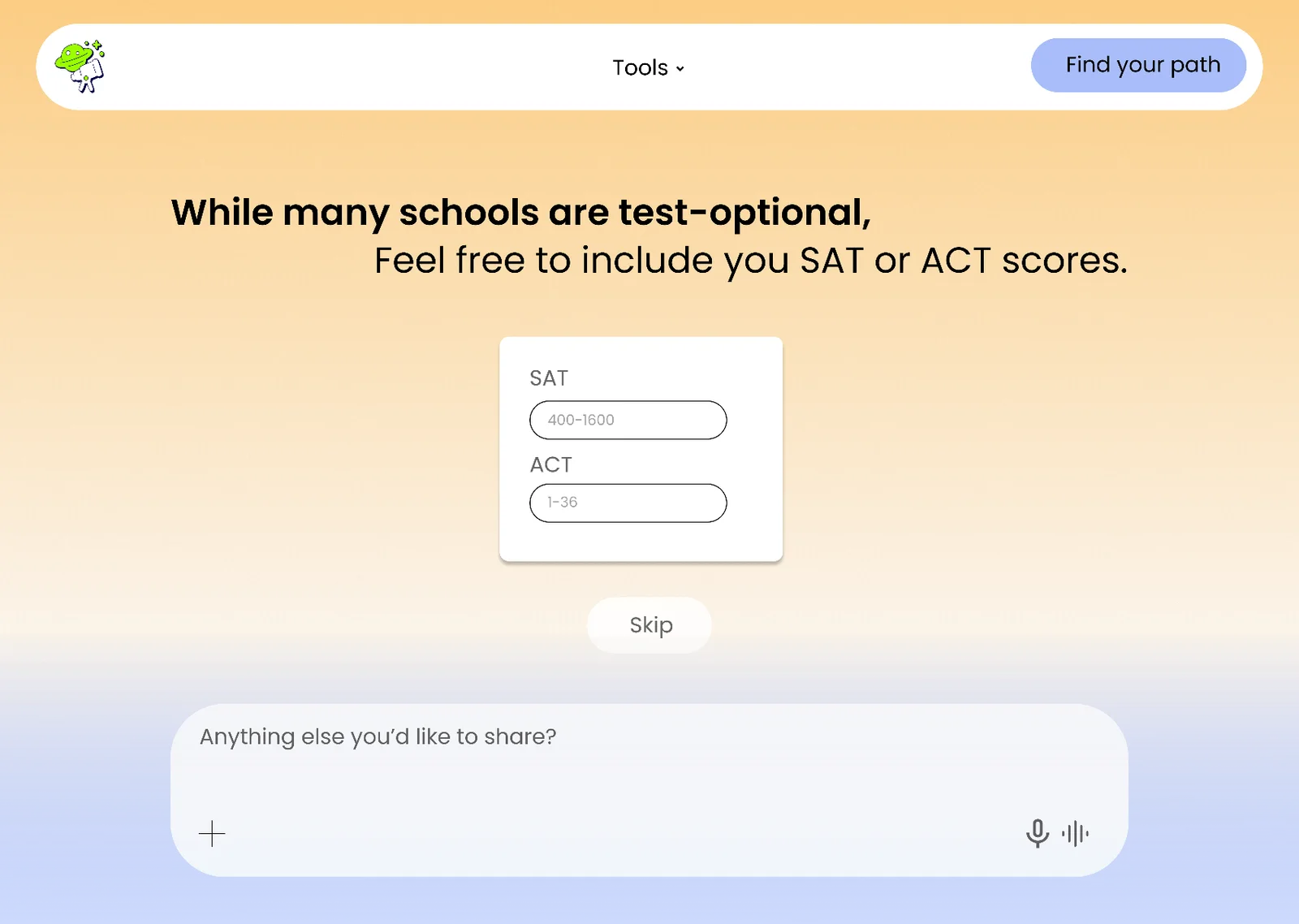
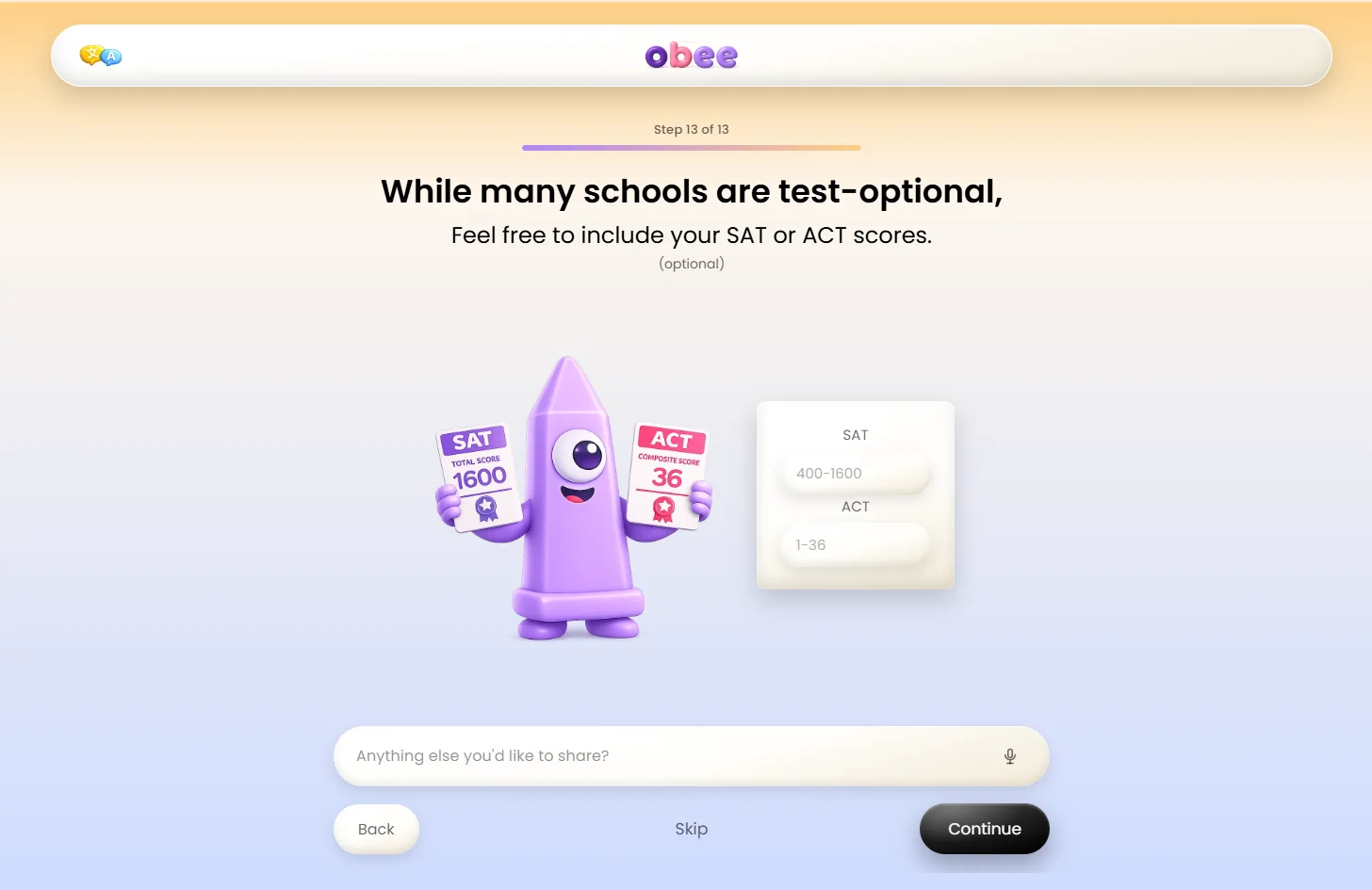
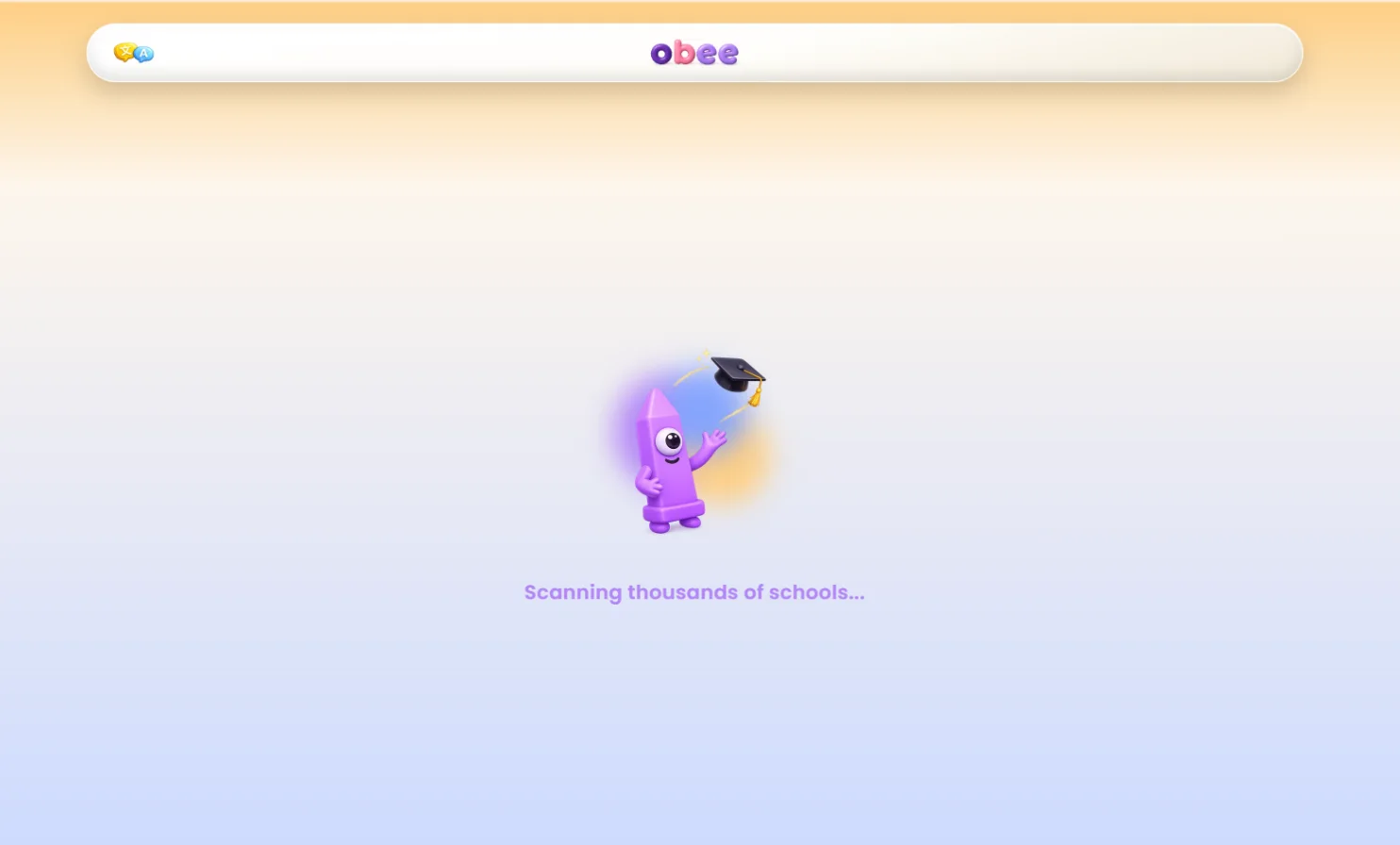
Each path asks 12 to 13 questions. These are the screens as they moved from paper to Figma to the shipped product, where every step gained its own Obee illustration and a free-text field that accepts anything the buttons can't capture.
01Let's start! First, who are you?
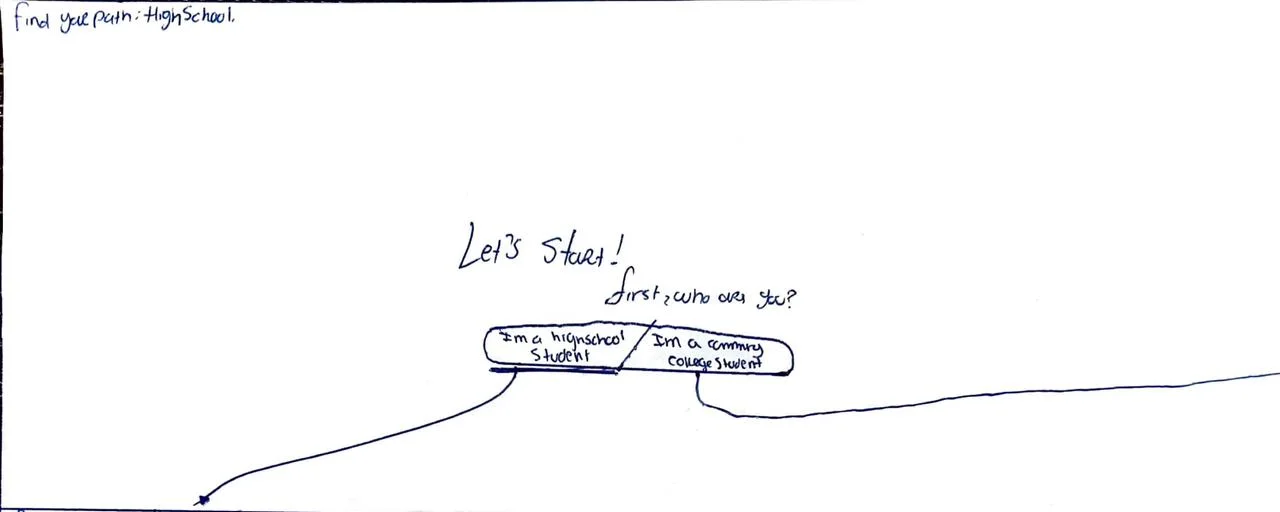
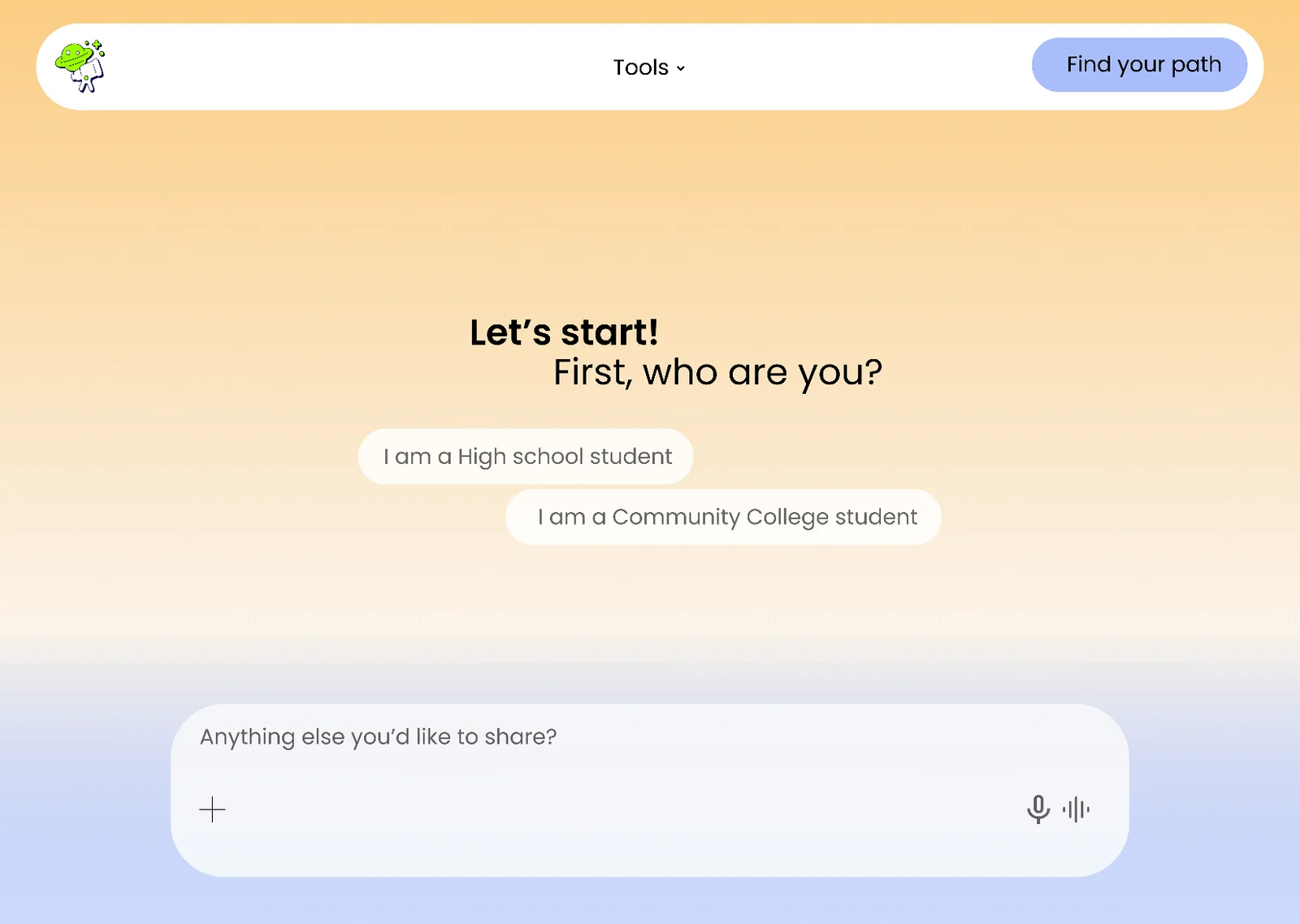
02Grades and GPA
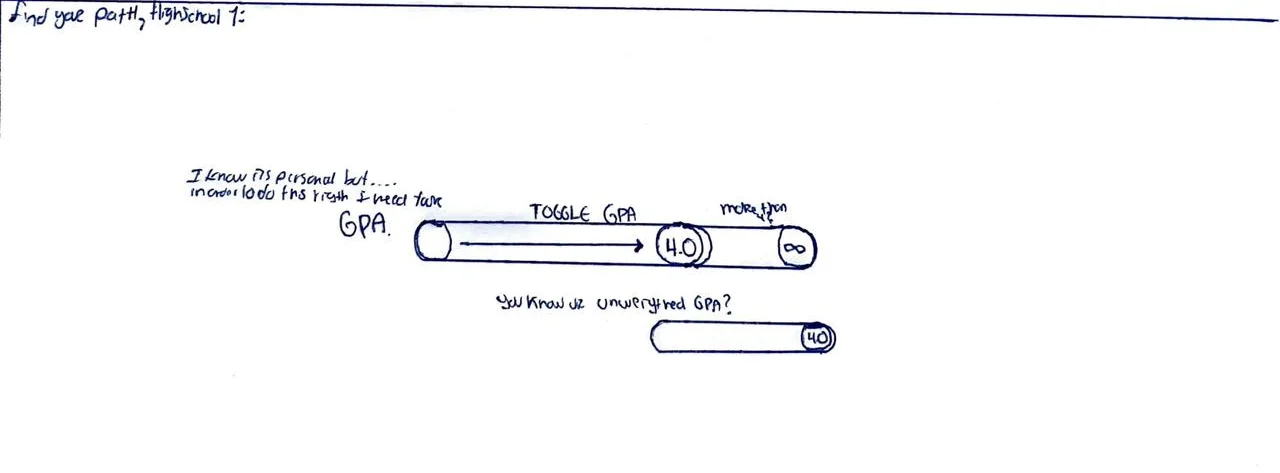
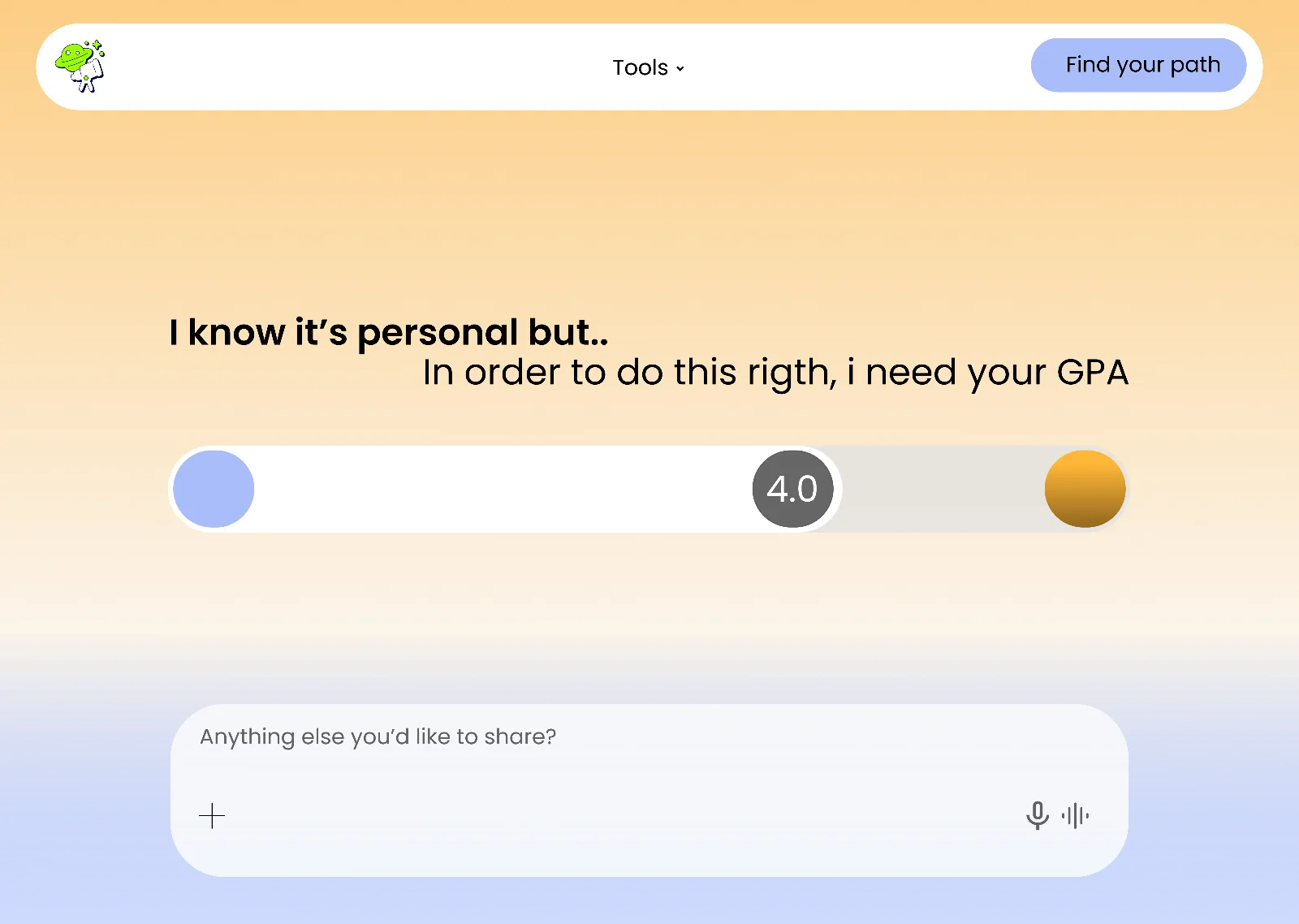
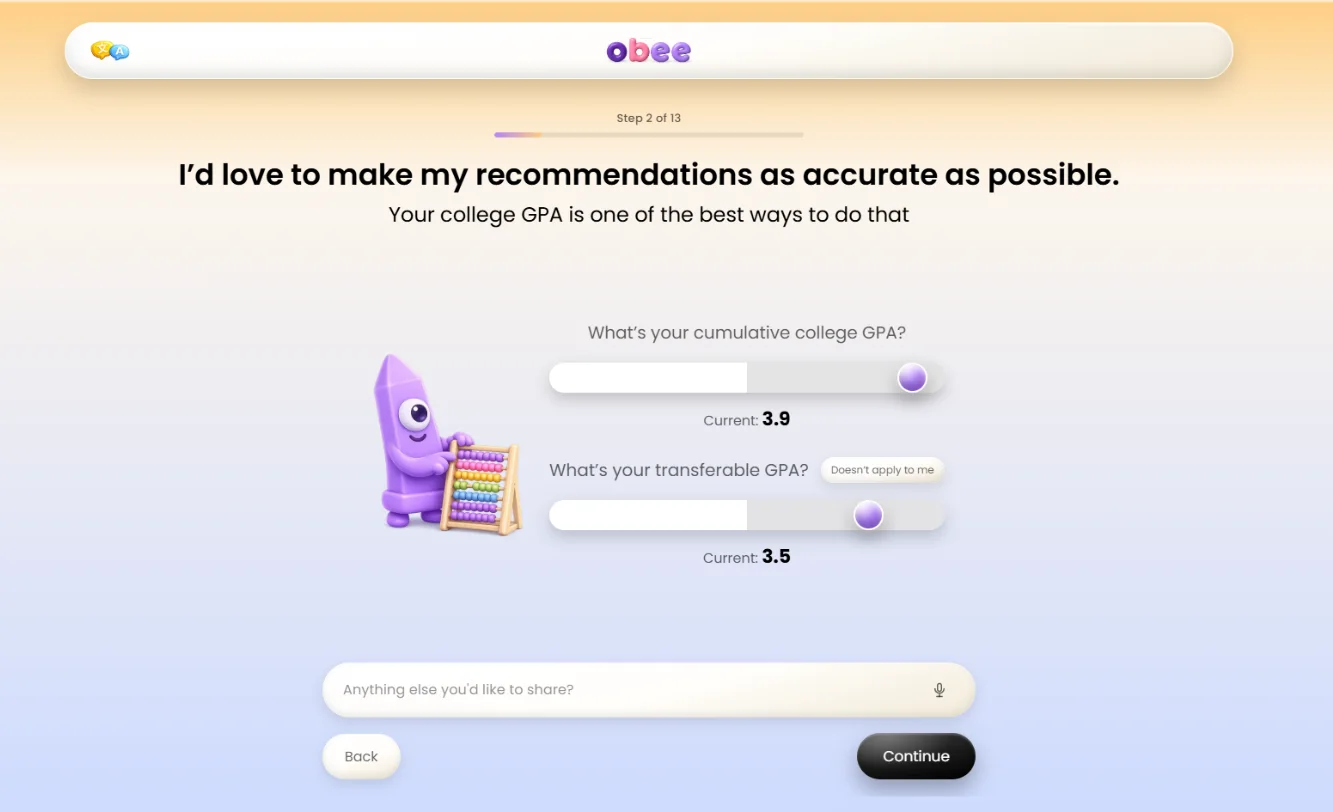
The sketched toggle became two sliders, one for cumulative GPA and one for transferable GPA.
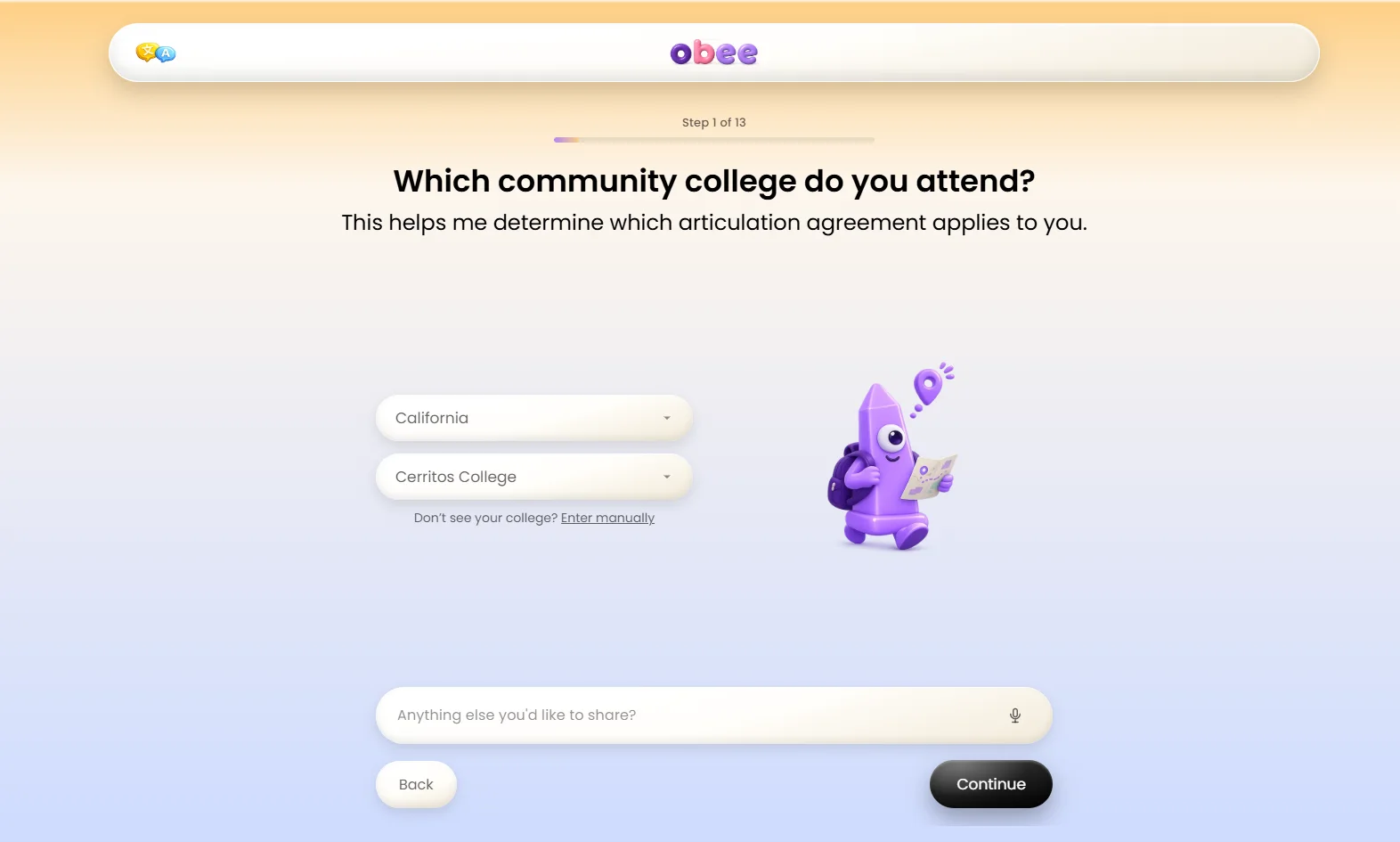
03Which community college do you attend?
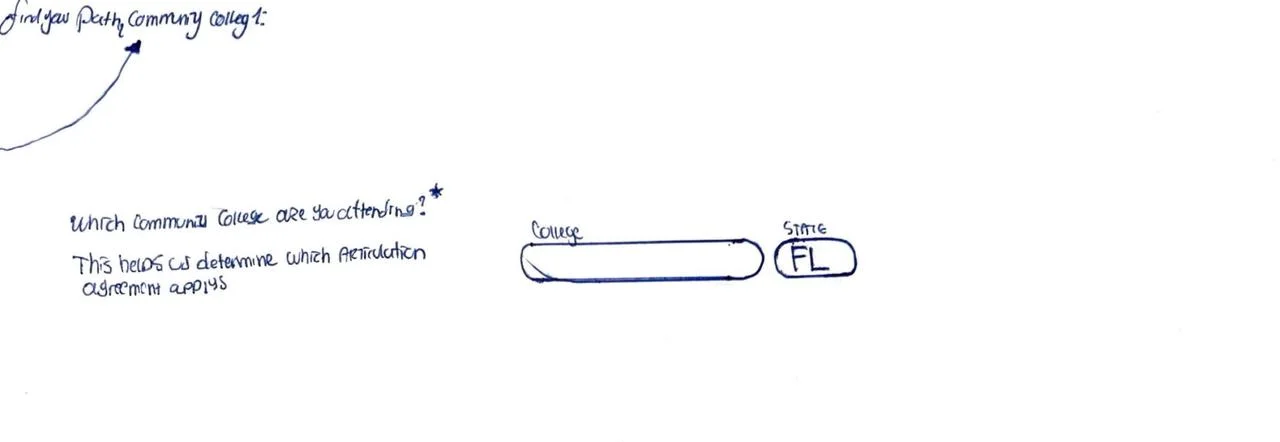
Added after the sketches were done, so its style follows the screens already designed.
04Units completed
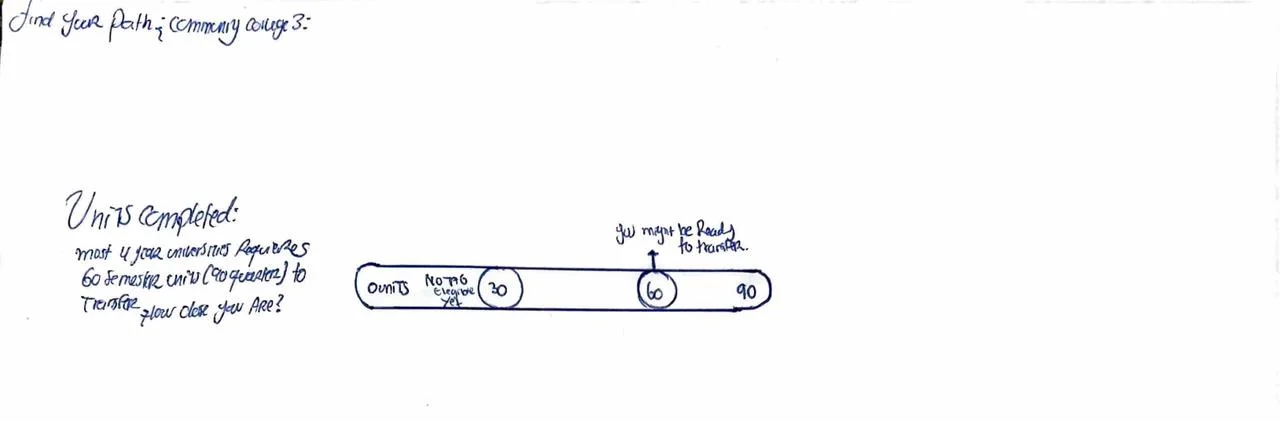
Built on the GPA slider.
05What's your intended major?
06Let's talk about academics
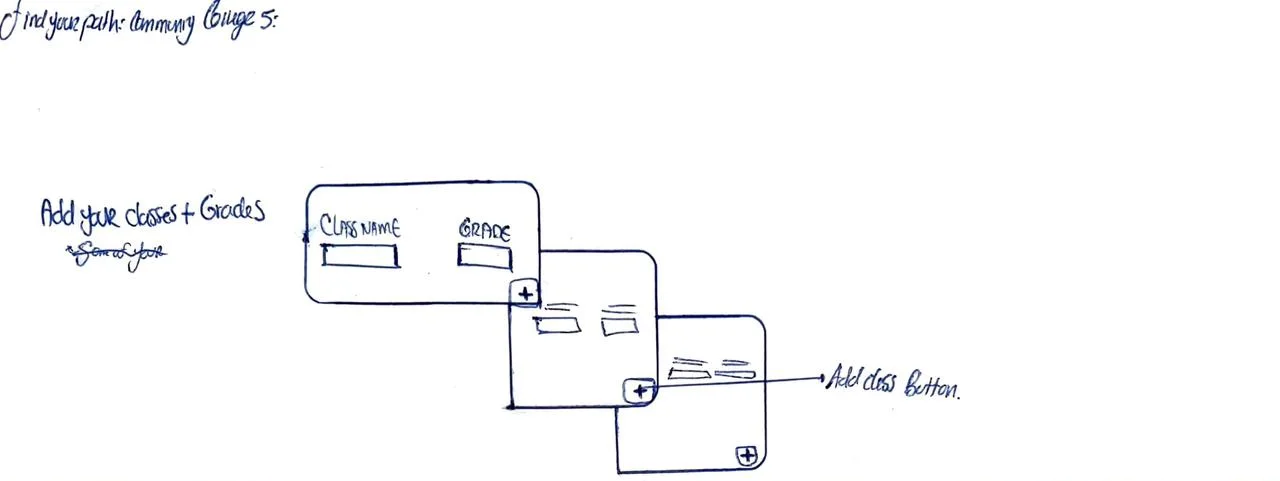
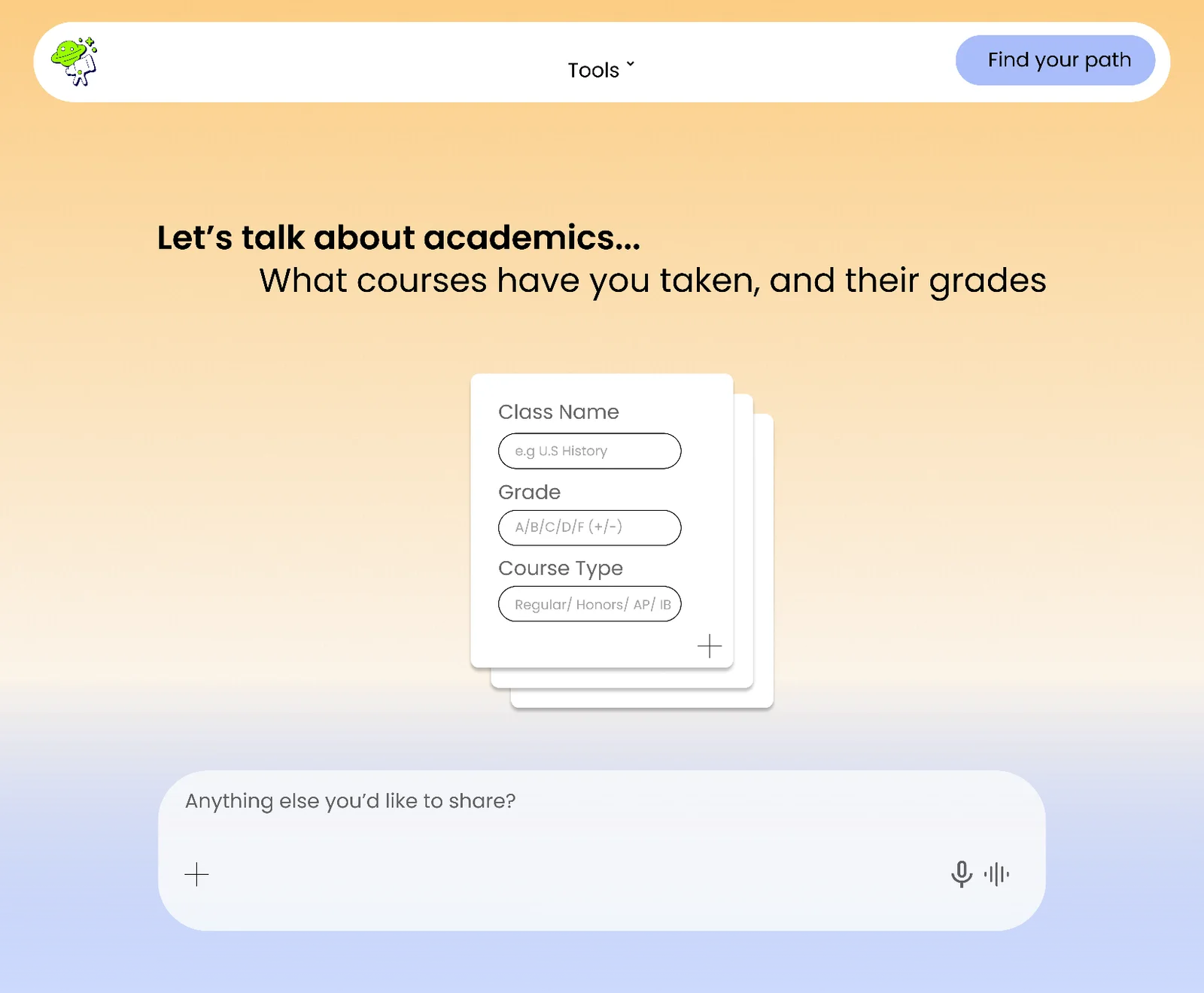
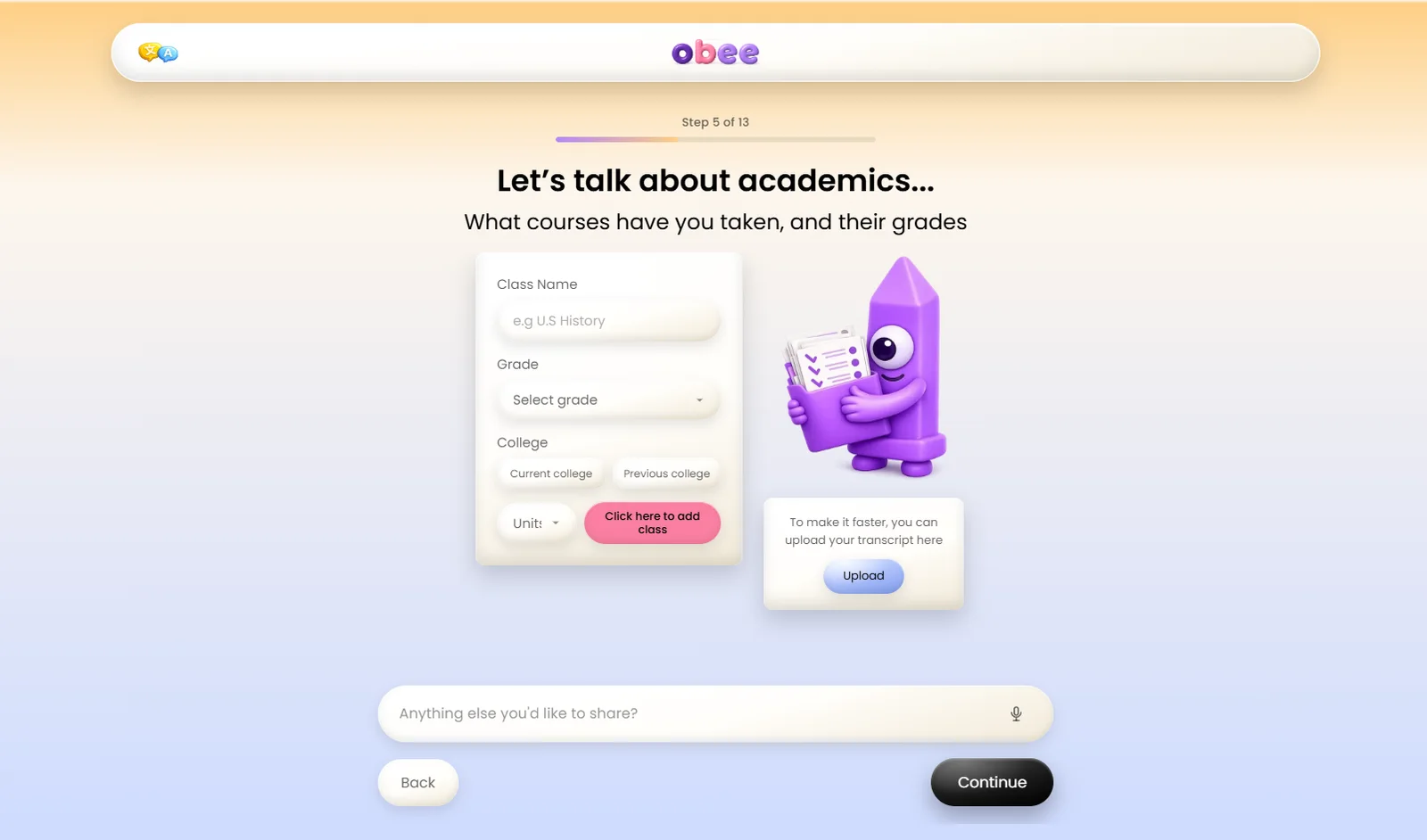
The stacked class cards from the sketch survived all the way to the product, which later added a transcript upload.
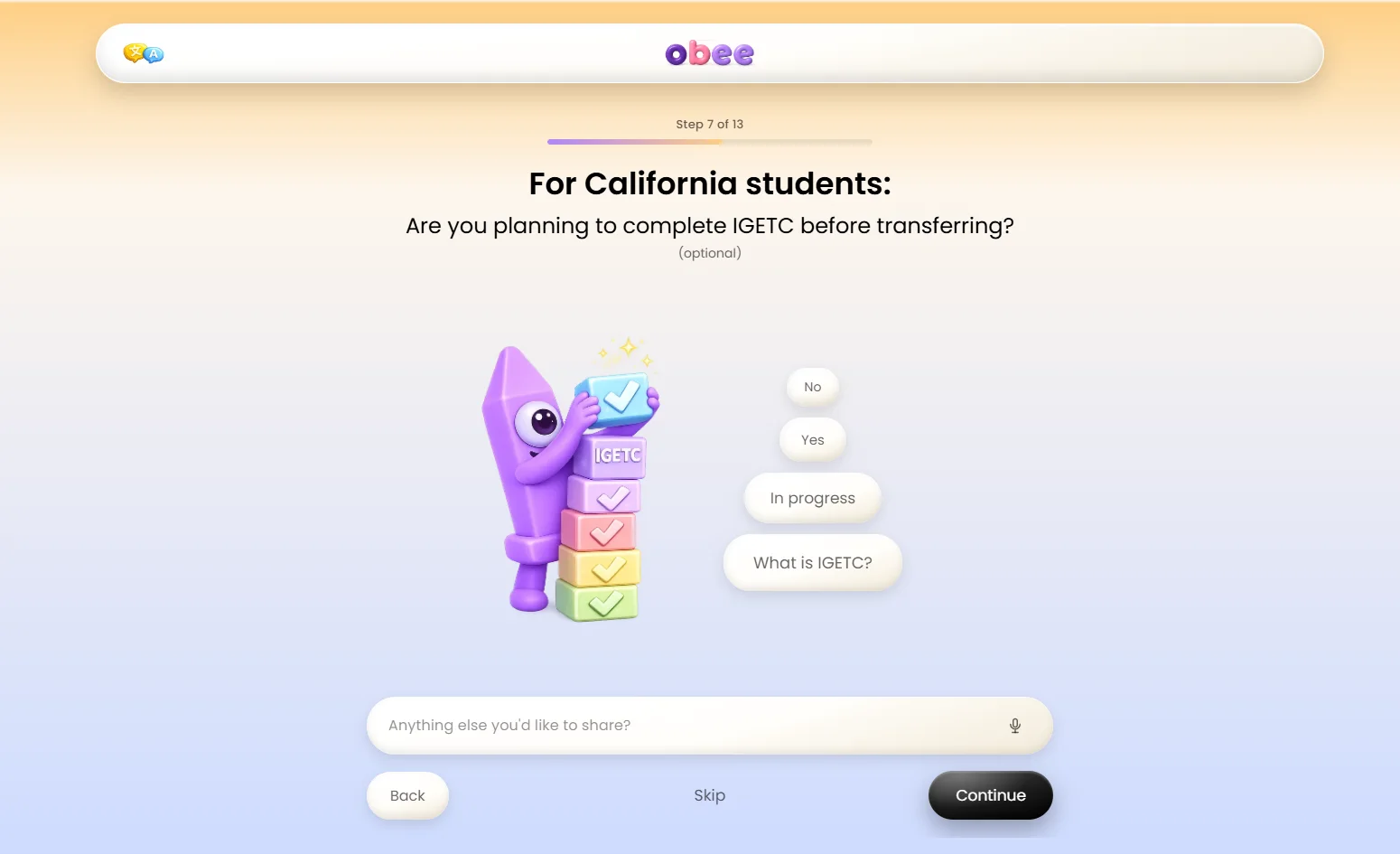
07For California students, IGETC
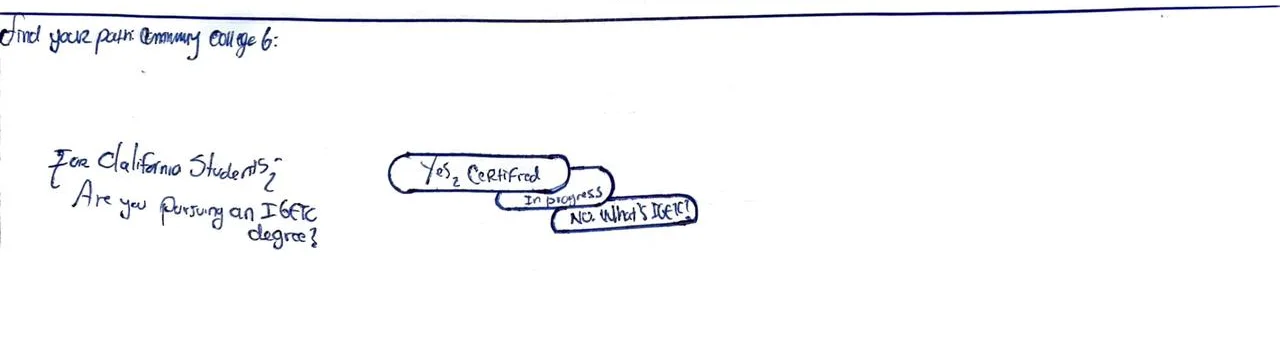
Grew out of the AP and IB screen, with a short explainer for students who don't know what IGETC is.
08When you're not in class
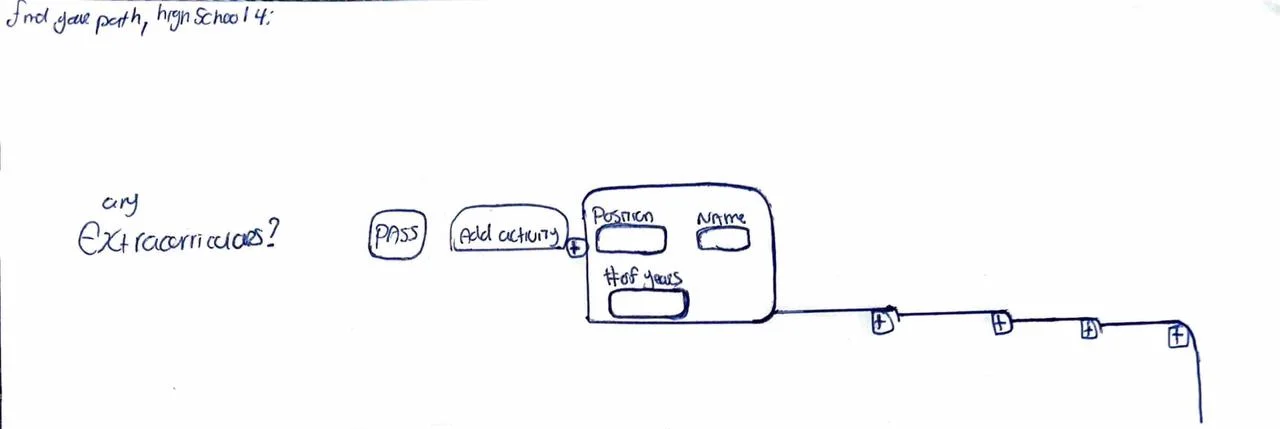
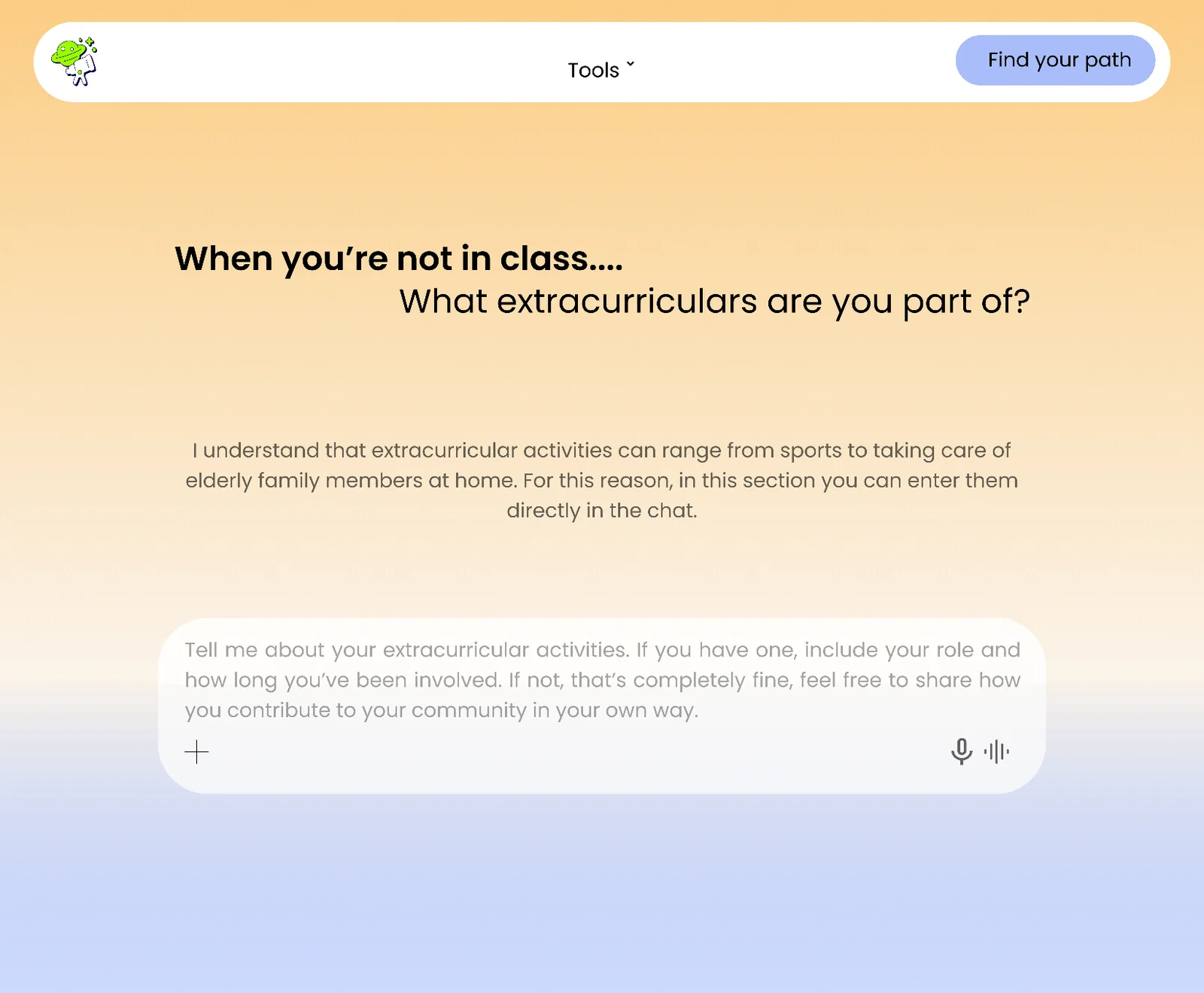
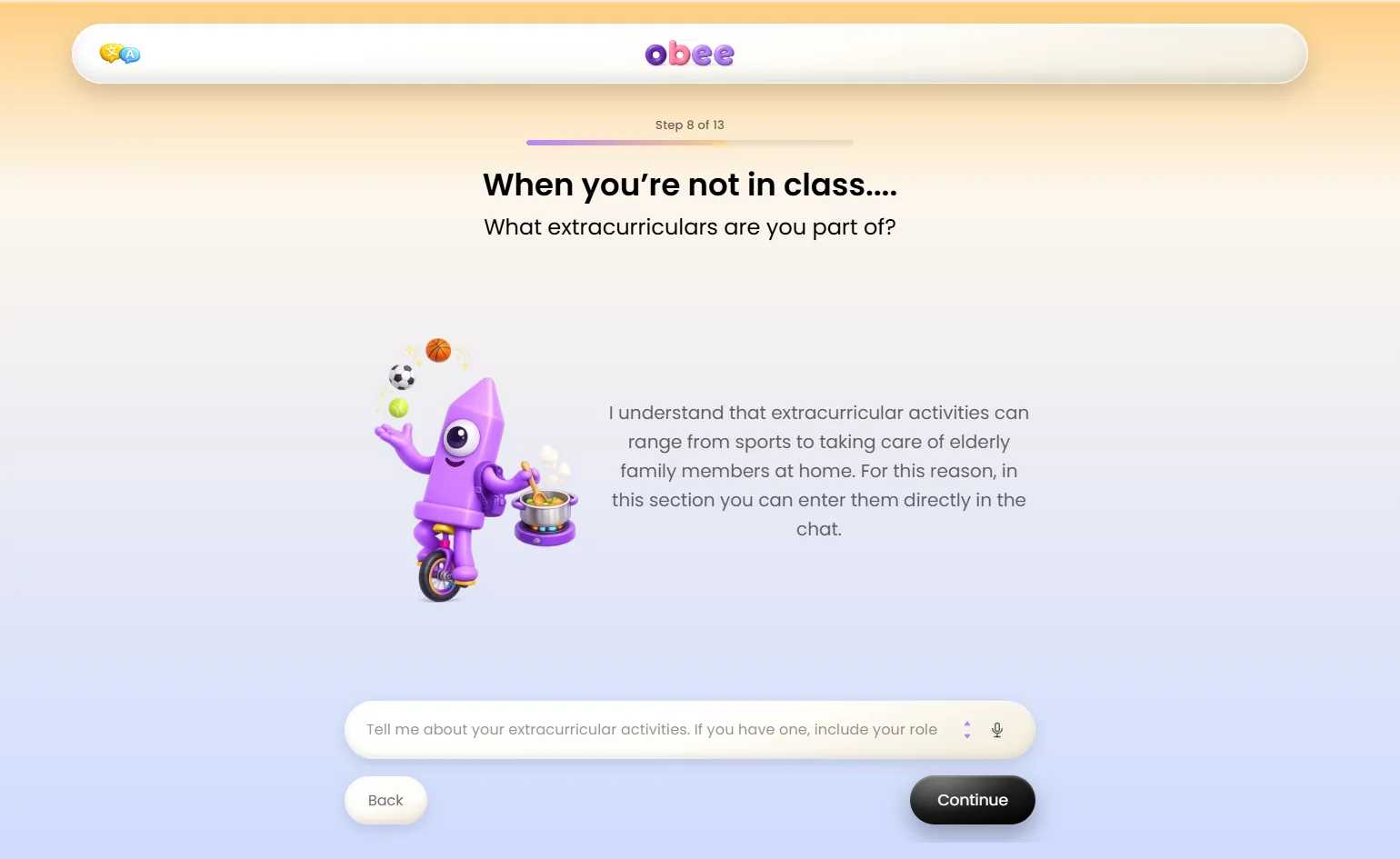
Extracurriculars moved to free text, because they range from sports to caring for family at home.
09Are you open to out-of-state schools?

10Do you have specific schools in mind?
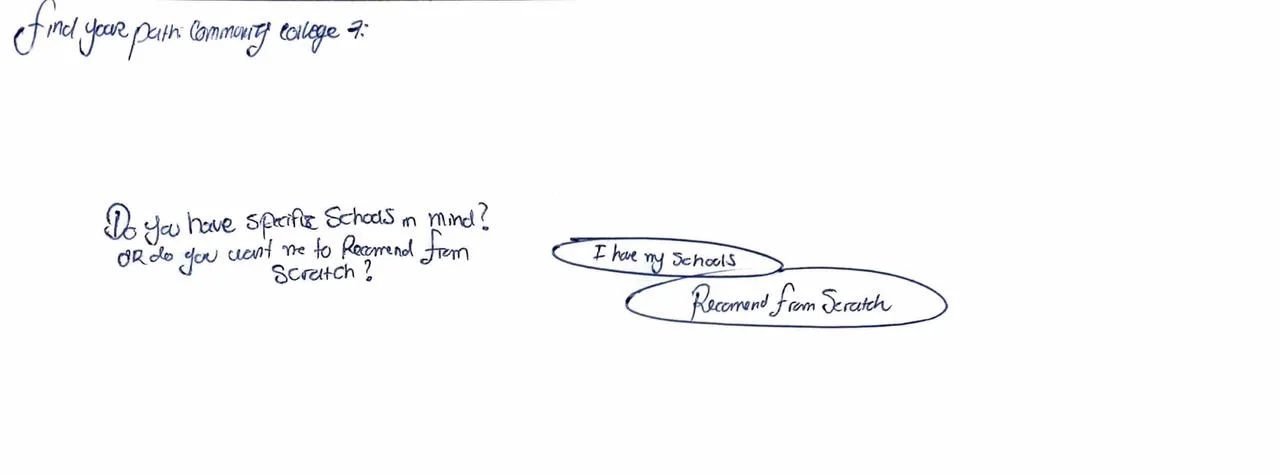
Styled after the out-of-state screen.
11Are you a first-gen student?
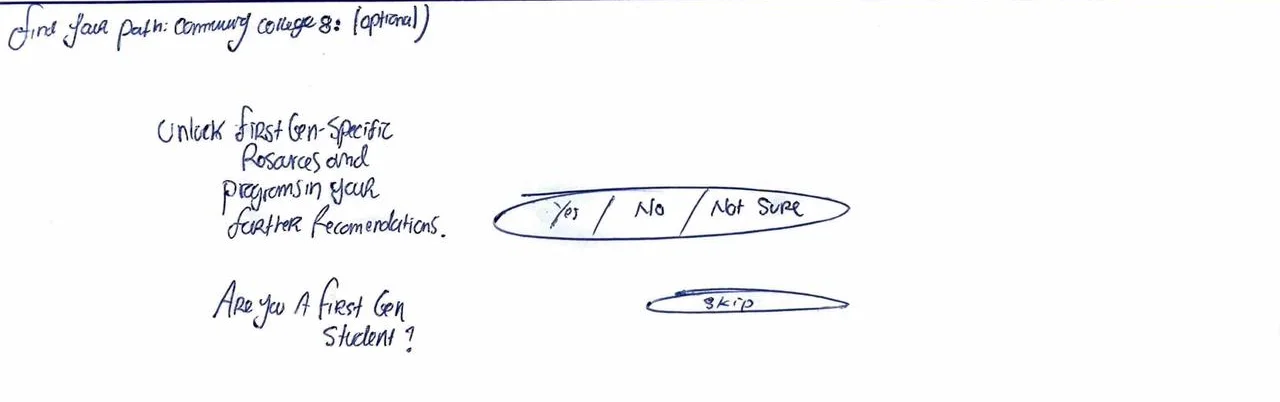
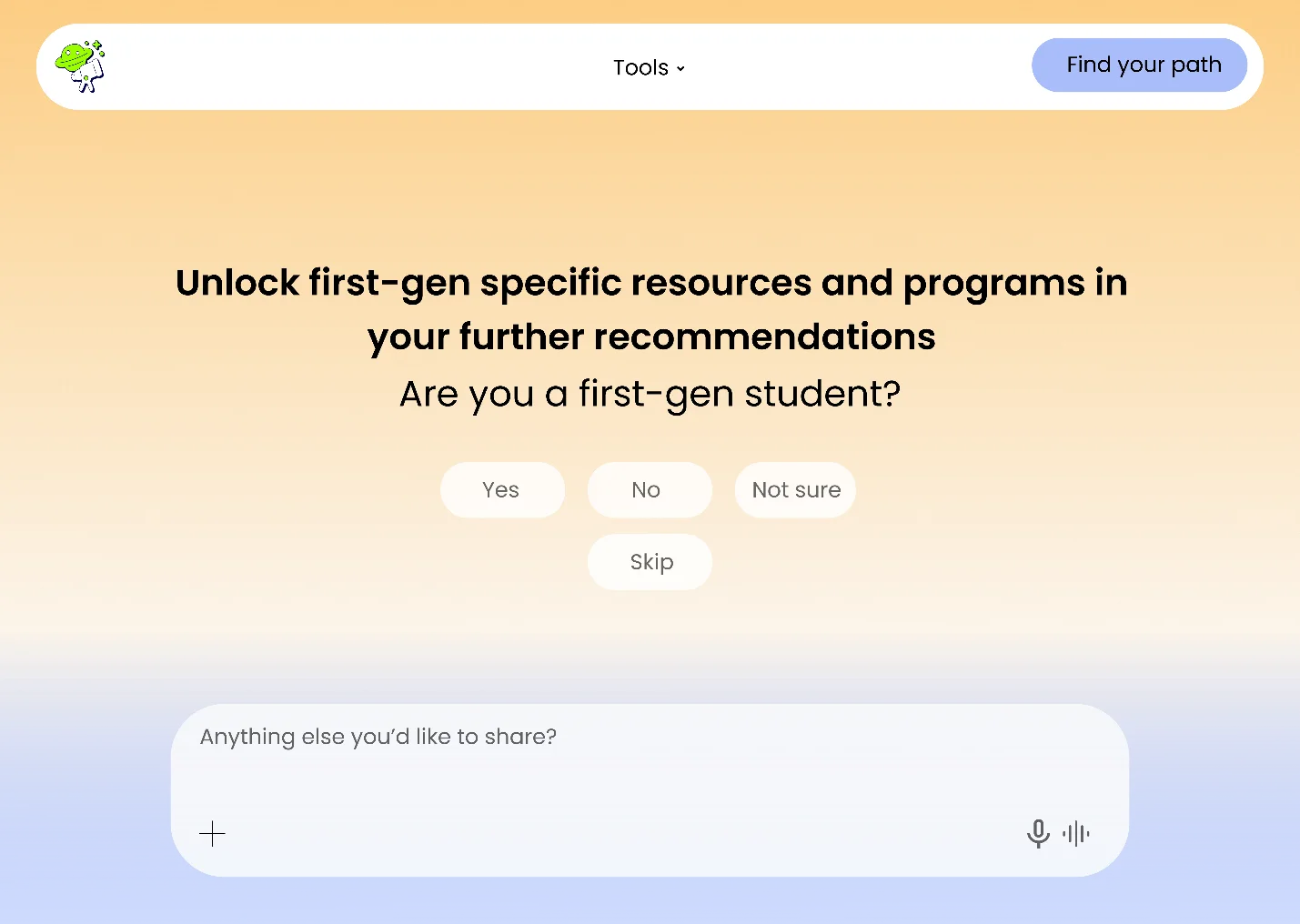
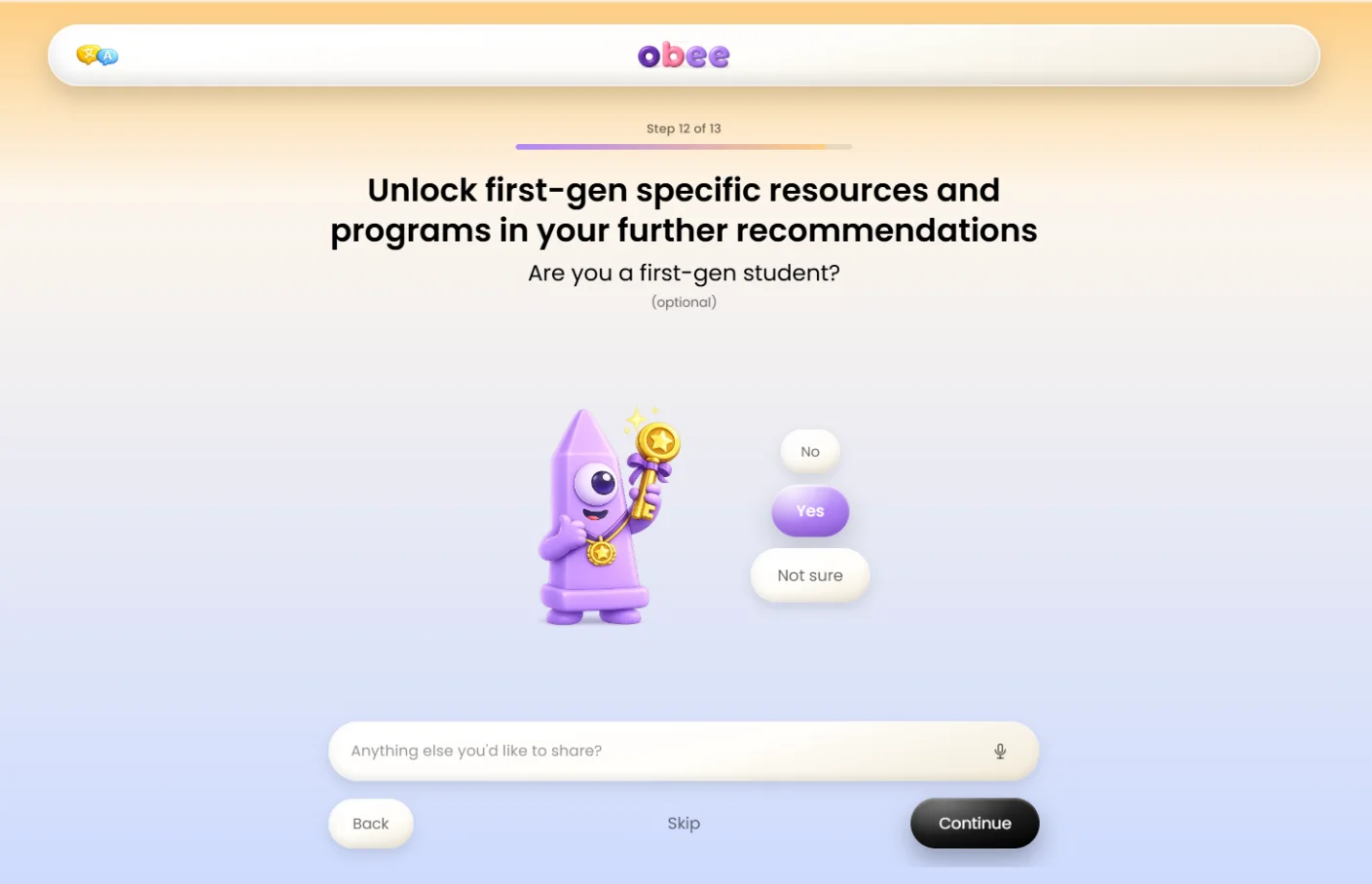
12Test scores

13Thinking
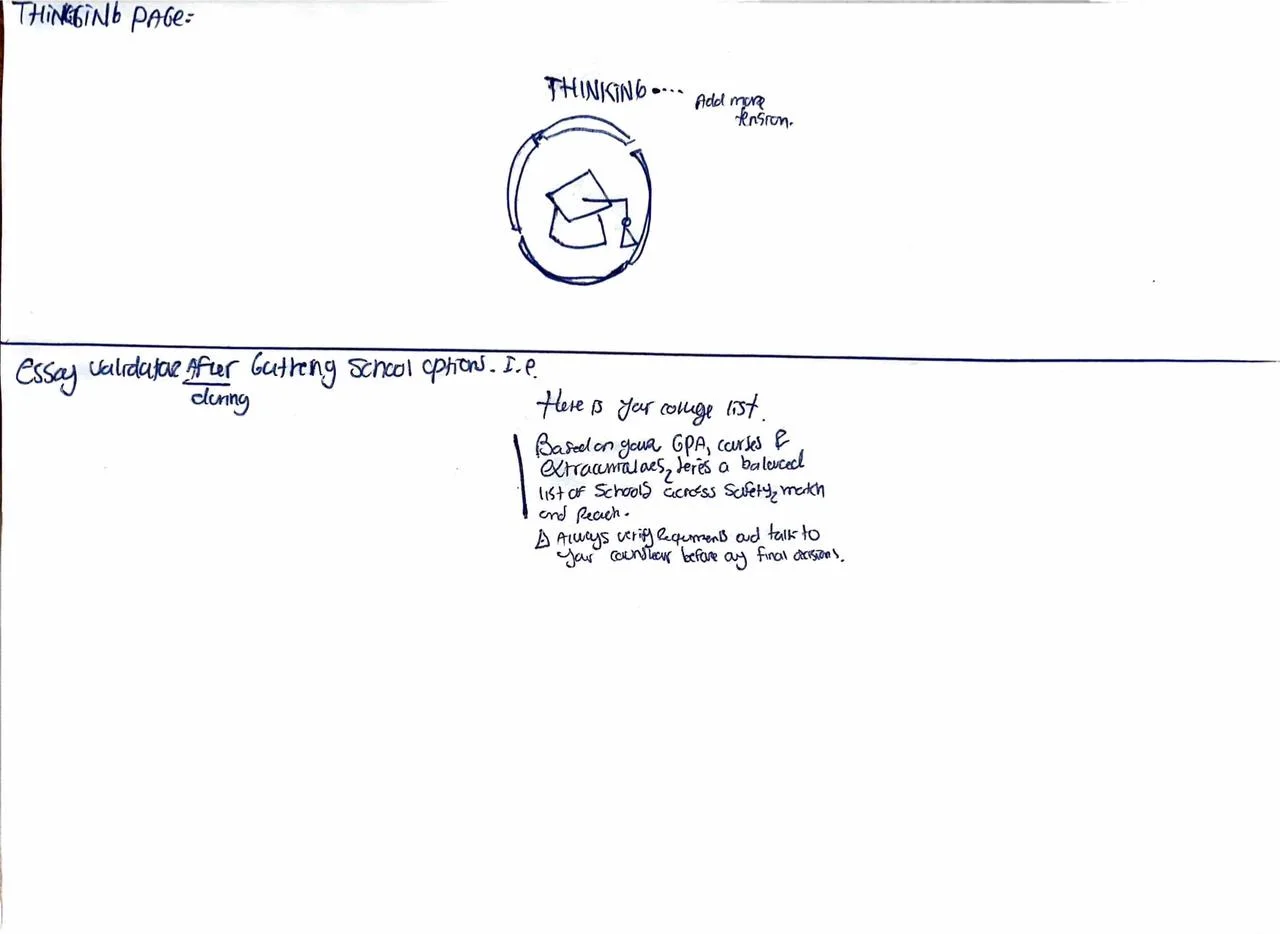
The sketched loading screen became Obee scanning thousands of schools.
An advisor that asks before it answers
Generic chatbots answer confidently even when they are guessing. Obee does the opposite. Each text box calls Claude to extract profile data from the intake and return a structured recommendation grounded in the documentation already in Obee's brain, including IGETC, TAG, ASSIST.org and Transferology.com, which is all the context I once wished I could bring into my own AI conversations.
If information is missing, Obee asks a question instead of making something up. Once the profile is complete it classifies schools, explains its reasoning and suggests next steps for students who want to strengthen their profile.
Hybrid intake
Quick-reply buttons, sliders, dropdowns and course cards, plus a free-text field on every step. Claude reads the free text, fills in profile fields and skips questions the student already answered.
Voice and transcripts
Students can speak their answers, or upload a photo or PDF of a transcript that Claude turns into the course list.
Honest results
A top pick with reasoning and up to eight schools tiered safety, target and reach, each marked verified when backed by ASSIST, TAG, IGETC or published data, or general when it is a broad estimate.
Follow-up chat
Students can ask about their results and request a rebuilt list, and the list arrives by email.
Five languages
English, Spanish, French, Chinese and Hindi, including the AI's replies.
First-gen support
A "Not sure" answer on the first-gen question opens an explainer instead of a dead end.
Under the hood
Obee is a framework-free static site with two serverless functions on Vercel, about 7,900 lines of hand-written JavaScript, CSS and HTML. The browser never calls Claude or Resend directly, so the key, the advisor prompt and the limits all live on the server.
BrowserStudent's browserVanilla JS, 5 languages, voice and transcript upload
Vercel serverlessapi/chat.jsIntake, results and transcript modes, with rate and spend limitsapi/send-results.jsEmails the school list
ServicesClaude Sonnet 4.6Fixed advisor prompt, JSON repliesResendThe student's inbox
Structured AI outputIntake replies come back as JSON, so one free-text answer can fill several fields at once and skip steps. Results have their own token budget so a list never cuts off midway.
Asks instead of guessingThe advisor prompt lives only on the server. It speaks with confidence about California's ASSIST, TAG and IGETC, points the other 49 states to Transferology and official transfer offices, and asks one clarifying question when key information is missing.
Spend and abuse limits20 turns per session, 4,000 characters per message and 30 requests per minute per IP, with a friendly message when credits run out. The API key never reaches the browser.
Privacy by defaultNo accounts and no database. The email is used once to send results and is not stored or logged.
Deliberately leanA framework-free static site with two serverless functions and one npm dependency. A database waits until there is a concrete need for one.
A friend, not a clinical chat window
Obee's identity is built around an obelisk, which I chose as a symbol of knowledge, wisdom and guidance, something that stands as a lasting source of information.
The character is intentionally playful and approachable, with one oversized eye and soft rounded limbs, so Obee feels like a friend accompanying you through the process rather than a flat, intimidating or overly clinical AI interface. Every intake step has its own Obee scene.
Obelisk purple
#BB8AF9PrimaryWarm gold
#FCD18DPrimaryLavender
#85A5FEGradientCream
#FDF6ECBackgroundPurple and gold give the logo and site a warm tone. Type is Poppins for the interface, with Elms Sans and Schoolbell for accents.
Free for every student
Every intake costs money in API calls, and I cover the infrastructure myself so Obee can stay free for students. It is my way of giving others the tool I wish I had when I was transferring.
Growth has been entirely organic, to the point that Obee reached the first page of Google for "Obee AI". The product is complete, has regular users, and the API budget I set aside keeps it running for students.
Research sources
- ASCA, Student-to-School-Counselor Ratio 2023/2024 (NCES Common Core of Data)
- ASCA, Updated Student-to-School-Counselor Ratio Data (Dec. 2024)
- NACAC, School Counseling (NACAC/EAB counselor survey; U.S. Dept. of Education CCD 2021/22)
- Education Week, College Advising Is in Short Supply in U.S. High Schools (NACAC 2018 survey of 2,251 counselors)
- CSBA, 2020/21 Civil Rights Data Collection (U.S. Dept. of Education, Office for Civil Rights)